

How AI Is Changing the Way We Measure Digital Marketing Accuracy for Small Businesses
Digital Marketing, Artificial Intelligence, Small Business Growth
How AI Is Changing the Way We Measure Digital Marketing Accuracy
If you run a small business, you cannot afford to guess whether your digital marketing is working. You need clear numbers, reliable reports, and confident predictions. Artificial intelligence (AI) is redefining how accurately you can measure every click, visit, and sale—turning scattered data into decisions you can act on today.
Why Accuracy in Digital Marketing Measurement Suddenly Matters More
Online marketing used to be simple: run an ad, count the clicks, hope for sales. That is no longer enough. Advertising costs are rising, customers jump between channels, and privacy changes limit traditional tracking. If your measurement is off by even a small margin, you can easily pour money into the wrong campaigns while better opportunities sit untouched.
AI does not magically fix bad marketing, but it does remove a major blind spot: inaccurate or incomplete data. By scanning thousands of data points in seconds, AI tools reveal which audiences, messages, and channels actually move the needle. That level of clarity was once reserved for large enterprises with dedicated analytics teams. Today, it is available to small business owners who know how to use the right tools.
1. AI Tools for Smarter Segmentation: Stop Treating Every Visitor the Same
Most small businesses still rely on basic segmentation: age, gender, location, maybe a few interests. That approach is shallow and often misleading. Two customers of the same age and city can behave completely differently online. AI-driven segmentation digs deeper by analyzing behavior, intent, and engagement patterns—not just demographics. This is where measurement accuracy starts to improve dramatically.
How AI Segmentation Actually Works in Practice
AI tools scan data from your website, email platform, and ad accounts to find patterns you would miss manually. Instead of one large “audience,” you get precise segments such as:
Visitors who browse multiple product pages but rarely add items to cart
Customers who always buy during discounts and ignore full-price offers
Email subscribers who open nearly everything but never click through
These segments are not guesses. They are built from real behavior over time. When you target each group with tailored messages, your conversion rates rise and your measurement becomes more reliable. You see exactly which segment responds, by how much, and at what cost.
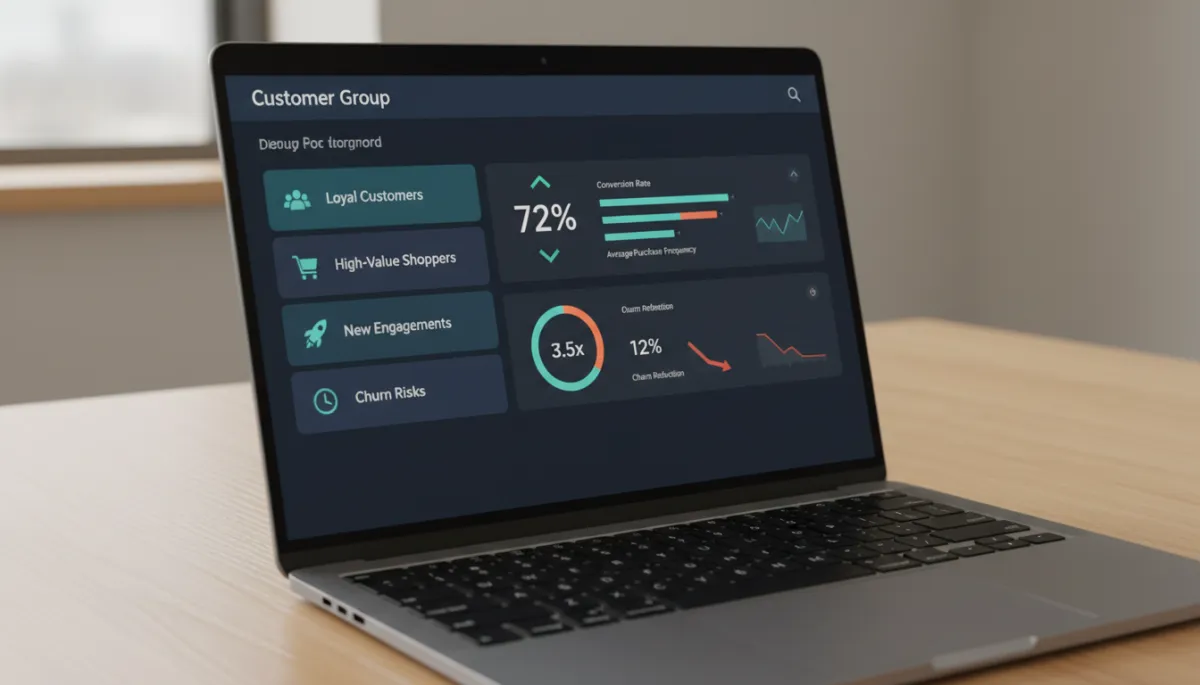
Smarter AI segments expose which customer groups actually drive profitable growth.
Why Smarter Segmentation Improves Measurement Accuracy
When you treat all visitors as one audience, your reports blur together. A strong result from one small group can hide poor performance from everyone else. AI segmentation solves this by showing performance at a segment level. You see that “Cart Abandoners” respond strongly to reminder emails, while “Discount Hunters” only convert when you offer a promotion. This clarity prevents you from making broad, inaccurate conclusions based on mixed data.
💡 Pro Tip: Start with three to five AI-generated segments and create simple, targeted campaigns for each. Measure the difference in conversion and cost per acquisition before expanding further.
2. AI-Powered Reporting: From Confusing Dashboards to Clear Answers
Many small business owners are drowning in reports they do not trust. Platforms like Google Analytics, Meta Ads, and email tools each report different numbers. Attribution is messy. You see clicks, impressions, and bounce rates—but not clear answers to basic questions like, “Which campaign brought in the most profit this month?”
AI-driven reporting tools are designed to fix this. They pull data from multiple platforms, clean it, connect it, and highlight what matters. Instead of staring at dozens of charts, you get direct explanations: which channels worked, which wasted money, and where to shift your budget next.
What AI Reporting Looks Like Day to Day
Modern AI reporting tools use natural language and visual summaries to give you quick clarity. Instead of digging for insights, you might see statements like:
“Your Google Search campaign generated 62% of this week’s online revenue at the lowest cost per sale.”
“Email subscribers who visited your website twice converted 3.1 times more often than first-time visitors.”
“Your retargeting ads are spending 40% of the budget but only driving 15% of sales.”
These are not surface-level metrics; they are direct answers to the questions you actually care about. That is what makes your measurement more accurate and more useful. You can adjust campaigns based on facts, not assumptions.

Clear AI reports turn scattered metrics into direct, confident business decisions.
Reducing Reporting Errors and Bias with AI
Manual reporting is vulnerable to mistakes and bias. You might export the wrong date range, mislabel a campaign, or focus on the numbers that confirm what you already believe. AI reduces these errors by automating data pulling, standardizing definitions, and checking for anomalies. If a campaign’s performance suddenly drops or spikes, the system flags it, instead of letting the issue hide in a spreadsheet for weeks.
📌 Key Takeaway: AI reporting does not give you more data. It gives you better data—organized, accurate, and aligned with the decisions you need to make about your marketing budget.
3. AI Predictions: See What Is Coming, Not Just What Happened
Historical reports tell you what happened last week or last month. That information is useful, but it does not tell you what to expect next. AI predictions close that gap. By analyzing past patterns, seasonality, and real-time behavior, AI models estimate future outcomes: likely sales, expected demand, and the probable impact of your next campaign.
Practical Ways Small Businesses Use AI Predictions
You do not need a data science team to benefit from predictive analytics. Many tools now include forecasting and prediction features designed for non-technical users. Here are concrete ways you can use them to improve marketing accuracy:
Sales forecasting: Estimate how many online sales you are likely to make next month based on current traffic and conversion trends.
Budget impact: Test scenarios such as “What if I increase my search ad spend by 20%?” and see projected revenue changes before you commit real money.
Churn prediction: Identify customers who are likely to stop buying or unsubscribe, then target them with retention offers in advance.
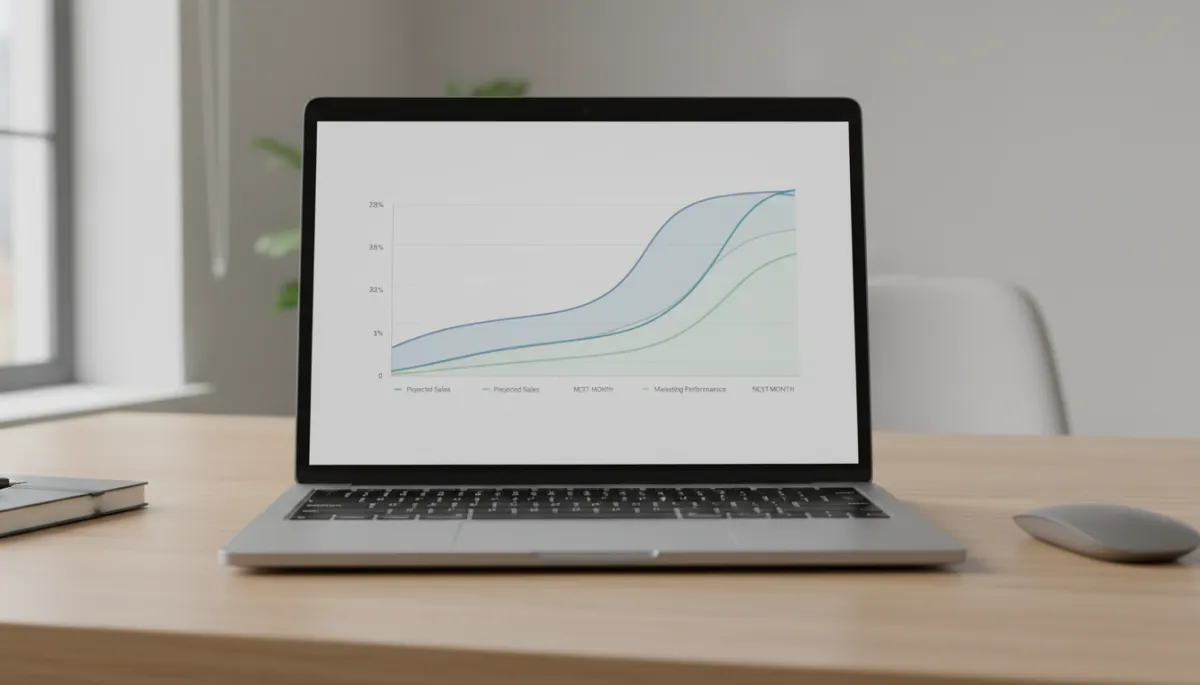
Predictive AI turns past performance into forward-looking sales and budget forecasts.
Why Predictions Improve Measurement Accuracy
Prediction forces you to compare expected results with actual results. When the AI forecasts 100 sales and you deliver 70, you immediately see a gap that demands investigation. Was the forecast unrealistic, or did a campaign underperform? This comparison sharpens your understanding of how reliable your data and strategies really are. Over time, your predictions become more accurate, and so does your confidence in every marketing decision.
💡 Pro Tip: Treat AI predictions as a planning tool, not a guarantee. Use them to set realistic targets, then adjust based on actual performance each week.
Choosing the Right AI Tools for Your Small Business
You do not need a complex tech stack to benefit from AI. You need a focused set of tools that align with your size, budget, and goals. When evaluating AI solutions for segmentation, reporting, and predictions, use clear criteria and ignore flashy features you will never use.
Core Capabilities to Look For
Data integration: The tool should connect to your website analytics, ad platforms, and email system without complex setup.
Automatic segmentation: It should propose meaningful customer segments based on behavior, not only demographics.
Plain-language reporting: Look for dashboards that answer questions in simple language, not just charts and tables.
Forecasting features: The system should offer basic predictions for sales, leads, or campaign performance.
Focus on AI tools that integrate cleanly and answer real business questions.
Budget and Implementation Considerations
For most small businesses, the right AI tools cost far less than a single full-time analyst. Many platforms offer tiered pricing, with entry-level plans that still include AI-driven insights. Prioritize tools that:
Provide clear onboarding and support, so you are not left guessing how to set them up.
Offer a free trial or pilot period to test accuracy against your existing reports.
Allow you to export or share reports easily with your team or accountant.
⚠️ Warning: Avoid tools that promise “instant results” without explaining how they use your data. You are paying for accuracy and clarity, not magic.
How to Start Using AI in Your Marketing Measurement This Month
You do not need a full overhaul to benefit from AI. A focused, step-by-step approach will deliver results without overwhelming your team or your budget. Use the following sequence to start improving your measurement accuracy within the next 30 days.
Define one clear goal. For example: “Understand which channel brings the highest lifetime value customers” or “Reduce wasted ad spend by 20%.”
Connect your data sources. Integrate your website analytics, ad platforms, and email list into a single AI-enabled reporting tool.
Activate AI segmentation. Review the suggested audience segments, then choose a few high-potential groups to target with specific campaigns.
Use AI reporting weekly. Replace manual spreadsheets with automated reports that highlight top-performing channels, campaigns, and segments.
Review predictions. Look at AI forecasts for next month’s sales or leads, then compare them with actual results and refine your strategy.
This process is straightforward, but the impact is significant. Within a few weeks, you will see which campaigns deserve more budget, which audiences respond best, and how reliable your future projections are. That is the foundation of accurate, accountable digital marketing.
The Bottom Line: AI Turns Guesswork into Measurable Growth
As a small business owner, you cannot control every change in the digital landscape. Algorithms will shift. Platforms will update. Privacy rules will tighten. What you can control is how accurately you measure your marketing and how quickly you act on what the numbers tell you. AI gives you that control by delivering smarter segmentation, clearer reporting, and more reliable predictions—all in language and visuals you can understand without a technical background.
The businesses that win over the next few years will not be the ones that spend the most on ads. They will be the ones that measure best, learn fastest, and adjust with confidence. Use AI to bring that level of accuracy into your own marketing now, while many of your competitors are still guessing.

When you measure accurately with AI, every marketing decision becomes a controlled investment.
