
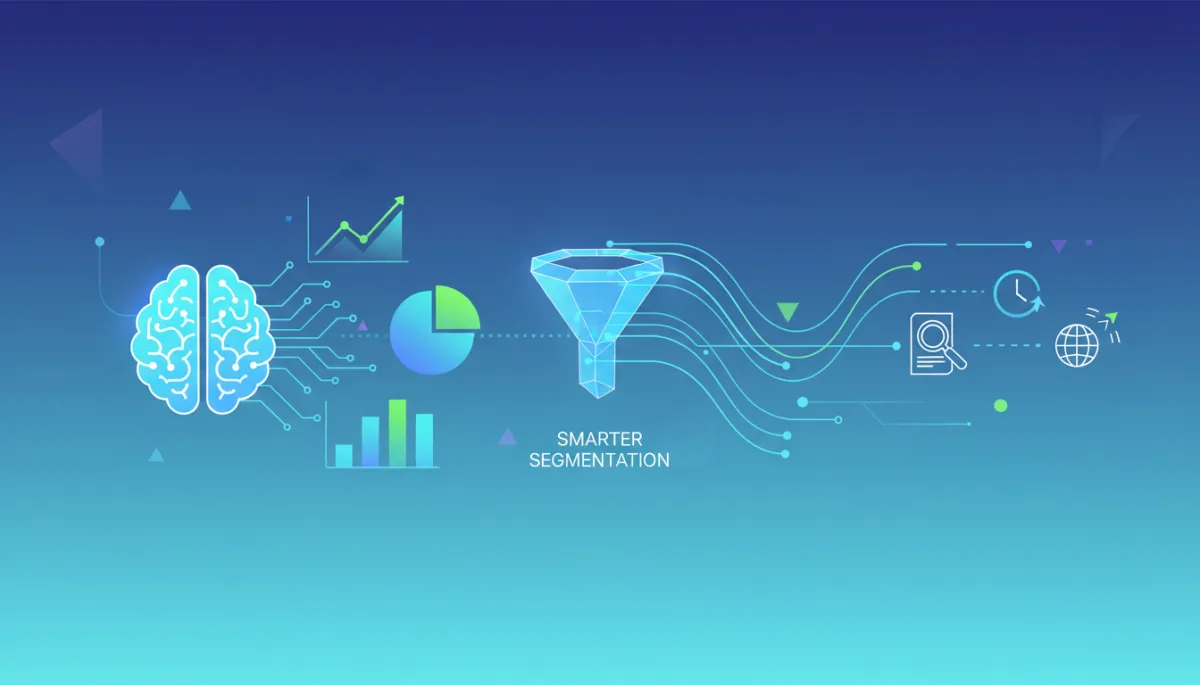
AI Revolutionizes Digital Marketing Measurement
Digital Marketing, AI Analytics, Measurement Accuracy
How AI Is Changing the Way We Measure Digital Marketing Accuracy
From smarter segmentation to predictive insights, AI is quietly rewriting the rules of what “accurate” digital marketing really means. Instead of guessing which audiences, messages, and channels work, teams can now measure impact with far greater precision—and act on it in real time.
Why “Accuracy” in Digital Marketing Needed an Upgrade
For years, digital marketing accuracy was limited by three big constraints: incomplete data, siloed tools, and human bandwidth. Marketers relied on last-click attribution, generic segments like “website visitors,” and static monthly reports that were outdated the moment they were exported. As channels multiplied and privacy rules tightened, those old methods stopped being enough to answer simple questions like:
Which audience segments are actually profitable, not just high-volume?
What content and offers move people from awareness to purchase over weeks or months?
How confident are we that our reported ROI reflects reality, not just tracking gaps?
AI is reshaping these foundations by connecting more data, spotting patterns humans miss, and automating decisions at a speed and scale that simply were not possible before. By 2026, research suggests that AI is no longer a “nice to have” add-on; it underpins personalization, predictive analytics, and customer insight across leading marketing teams (Forbes Tech Council).
📌 Key Takeaway: AI doesn’t just make marketing faster; it makes measurement more trustworthy by reducing guesswork, surfacing hidden patterns, and tying activity to outcomes.
1. AI Tools for Smarter Segmentation: From Demographics to Real Intent
Moving Beyond Basic Segments
Traditional segmentation often stops at surface-level traits: age, location, device, or a single behavior like “added to cart.” The problem is that people with the same demographics can behave very differently. AI-driven segmentation goes deeper by analyzing:
Behavioral patterns – frequency, recency, and type of interactions across web, email, and social.
Engagement quality – time on site, scroll depth, content consumed, video completion rates.
Propensity signals – patterns that historically correlate with purchase, churn, or upgrades.
Instead of manually creating rules like “all users who downloaded an ebook,” AI clusters users into segments based on thousands of signals at once. These segments might be labeled as “high-intent researchers,” “deal-driven repeat buyers,” or “at-risk subscribers,” each with different likelihoods to convert or churn.
Practical AI Segmentation in Today’s Stack
In 2026, you don’t need a data science team to benefit from this kind of intelligence. Many tools now bake AI segmentation directly into everyday workflows:
Google Analytics 4 with Gemini uses AI to surface audiences likely to purchase, churn, or engage, based on real-time behavioral data. You can then sync these audiences to ad platforms for precise targeting and remarketing, improving both accuracy and ROI.
Lead-gen accuracy tools like Cleanlist, Apollo.io, and Clay combine AI-driven enrichment and lead scoring. Cleanlist, for example, reports up to 98% verified email accuracy, which dramatically reduces wasted outreach and distorted funnel metrics (Cleanlist).
These tools make segmentation more accurate by ensuring the data behind each audience is both clean and predictive, not just descriptive.
Smarter Segmentation for AI-Driven Search & Visibility
As users increasingly discover brands through AI assistants and generative search, a new kind of segmentation has emerged: understanding how your brand appears in AI-generated answers. Tools like Atyla and Ranketta segment visibility by:
Specific AI platforms (ChatGPT, Gemini, Perplexity, and others).
Product or topic-level mentions across AI responses.
Share of voice and sentiment in generated answers.
This gives marketers a more accurate picture of where they truly “show up” in the AI-powered web, not just in traditional search results. Combined with GEO (Generative Engine Optimization) tools like Atyla and Evertune, teams can now segment performance by how well their content is favored and referenced by AI systems, then optimize accordingly using real server log data and AI model feedback.
💡 Pro Tip: Treat AI visibility as its own channel. Build segments for “AI-discovered” visitors and compare their conversion, lifetime value, and behavior against other acquisition sources.
2. AI-Powered Reporting: From Static Dashboards to Living Narratives
Why Traditional Reporting Falls Short
Traditional reports are often:
Backward-looking – they tell you what happened, not what’s likely to happen next.
Static – frozen in a PDF or slide deck while the campaign keeps evolving.
Time-consuming – analysts spend hours exporting, cleaning, and formatting data instead of interpreting it.
This creates a gap between what the data knows and what decision-makers actually see. AI closes that gap by automating the heavy lifting and surfacing what matters most.
GA4 + Gemini: Anomaly Detection and Natural-Language Insights
Google Analytics 4 integrated with Gemini is a prime example of AI-enhanced reporting. Instead of manually slicing data, marketers can:
Ask natural-language questions like “Why did conversions drop last week?” and receive AI-generated explanations backed by data.
Get anomaly alerts when metrics deviate from expected patterns, such as a sudden spike in bounce rate from a specific region or device.
View predictive metrics, like purchase probability or churn risk, directly in standard reports.
This makes reporting more accurate in two ways: it reduces manual data handling (and the errors that come with it), and it highlights the drivers behind performance, not just the outcomes.
AI That Writes the Report for You
Many teams now use tools like ChatGPT and Jasper to turn raw data into executive-ready narratives. Instead of manually drafting a monthly performance summary, marketers can feed in key metrics and have AI:
Summarize what changed and why in clear, non-technical language for stakeholders.
Highlight top-performing campaigns, segments, and creatives with supporting data points.
Suggest next steps, such as budget shifts or tests to run, based on trends.
Meanwhile, platforms like Sprout Social use Trellis AI and AI Assist to automatically analyze social performance, generate captions, and even propose schedule optimizations. This turns reporting from a static artifact into a live feedback loop that informs the next campaign in real time.

AI-generated narratives turn complex dashboards into clear, action-ready marketing stories.
Cleaning the Data Before It Skews the Story
Accurate reporting starts with accurate data. AI helps here, too, by:
Identifying and removing bots, spam, and anomalous traffic patterns that inflate or distort metrics.
Deduplicating contacts and sessions across devices and channels, so you measure real people—not multiple versions of the same person.
Enriching records with verified attributes (company size, industry, role) so B2B funnel reports reflect true buying committees.
Tools like Cleanlist and AI-powered enrichment platforms are critical here. When your contact data is 98% accurate instead of riddled with bounces and duplicates, everything from open rates to pipeline attribution becomes more reliable.
📌 Key Takeaway: AI-powered reporting isn’t just “prettier dashboards.” It’s cleaner data, automated analysis, and narrative context that lets non-analysts trust and act on the numbers.
3. AI Predictions: Seeing What’s Coming Before It Hits Your KPIs
Predictive Analytics as a New Baseline
By 2026, predictive analytics has moved from experimental to expected. Gartner and other analysts highlight AI-powered forecasting and personalization as core drivers of digital marketing performance (Gartner). Instead of asking, “What happened last quarter?” leading teams ask:
Which leads are most likely to convert in the next 30 days?
Which customers are at risk of churn, and what offers keep them engaged?
How much revenue can we realistically expect from each channel next month?
AI models answer these questions by training on historical behavior, campaign results, and external signals. The result is not a crystal ball, but a set of probability scores that make planning far more grounded in reality.
Predictive Scoring for Messages and Creatives
One of the clearest examples of AI improving accuracy is in copy and creative performance. Tools like Anyword assign predictive performance scores to ad copy, email subject lines, and landing-page headlines before you even launch them. Instead of running endless A/B tests on guesses, marketers can:
Start with variants the model believes have the highest chance of success based on historical data.
Tailor messages to specific segments (e.g., value buyers vs. early adopters) with AI-generated copy tuned to each group’s language patterns.
Reduce wasted impressions and budget on low-likelihood variants.
Similarly, tools like Frase and Surfer SEO use AI to predict which content structures, topics, and keyword clusters are most likely to rank and engage, especially as search engines become more AI-driven. This shifts content planning from intuition to evidence-based strategy.
Forecasting Revenue, Churn, and Channel Performance
On the analytics side, AI-enhanced platforms like GA4 with Gemini and specialized tools such as Evertune help teams forecast:
Revenue by channel – based on current pipeline, historical conversion paths, and seasonality.
AI search-driven traffic – using model APIs and consumer panels to understand how often your brand is surfaced in AI answers and what that means for future visits.
Customer lifetime value (LTV) – by learning which early behaviors predict long-term loyalty or rapid churn.
This level of forecasting makes budget allocation more accurate. Instead of evenly spreading spend or reacting after the fact, you can invest ahead of time in the channels and segments with the highest predicted impact.
💡 Pro Tip: Start simple with predictions. Use one or two models—like purchase probability and churn risk—and build internal trust by tracking how close the forecasts come to reality over a few months.
Building an Accuracy-First AI Marketing Stack in 2026
With so many tools available, it’s easy to get lost in features. The most effective teams focus less on volume of tools and more on orchestration—how each AI capability contributes to clearer, more reliable measurement. A practical, accuracy-focused stack might look like this:
Content strategy & execution: Jasper or ChatGPT Plus for campaign concepts, messaging frameworks, and consistent cross-channel copy; Surfer SEO or Frase for evidence-based content outlines and optimization.
Ads & performance messaging: Anyword for predictive copy scoring and variant selection before launch; platform-native AI bidding for real-time budget optimization.
Lead generation & data accuracy: Cleanlist plus Apollo.io or Clay for enriched, verified contact data and smarter outreach segmentation.
Analytics & attribution: GA4 + Gemini as the central analytics hub; Evertune, Atyla, and Ranketta for AI search visibility and behavior in generative engines.
Visual content: Canva Magic Studio or Adobe Firefly for brand-consistent creative that can be tested, iterated, and measured across campaigns.
Social intelligence & automation: Sprout Social with Trellis AI and AI Assist for performance insights, content suggestions, and streamlined reporting.
Industry data shows that while 80–90% of enterprise teams now use AI in some form, only a small fraction have truly integrated it into their workflows end to end (Kaltura). The difference between dabbling and integrating often comes down to whether AI is directly tied to how you measure success—not just how you produce assets.
Guardrails: Ethics, Privacy, and Trust in AI-Driven Measurement
As AI takes a bigger role in segmentation, reporting, and predictions, accuracy is not just a technical question—it’s an ethical one. Misused or biased models can over-target vulnerable groups, misinterpret intent, or rely on data that users never knowingly consented to share. Regulators are already tightening expectations around transparency and consent, and that trend will only accelerate toward 2026 (Marketing Dive).
Be transparent: Clearly explain how you use AI for personalization and measurement in your privacy notices and consent flows.
Audit for bias: Regularly review segments and predictions to ensure they’re not unfairly excluding or targeting protected groups.
Respect data minimization: Just because AI can ingest more data doesn’t mean it should. Use only what’s necessary for clearly defined outcomes.
📌 Key Takeaway: The most accurate marketing isn’t just numerically precise—it’s also fair, transparent, and aligned with user expectations and regulations.
Bringing It All Together: A More Accurate, Less Guessy Future
AI is changing the way we measure digital marketing accuracy on three fronts:
Segmentation: From broad, static lists to dynamic, intent-based clusters informed by behavior, AI search visibility, and verified data quality.
Reporting: From manual, backward-looking decks to AI-assisted narratives, anomaly detection, and real-time, natural-language insights grounded in cleaner data.
Predictions: From gut-feel forecasts to probability-driven planning for copy, campaigns, revenue, and churn, using tools purpose-built for marketing realities.
The marketers who will thrive in this environment are not necessarily the ones with the biggest budgets or the longest tool lists. They are the ones who:
Choose AI tools that directly improve how they measure and learn—not just how fast they can create assets.
Build feedback loops where every campaign informs the next through AI-enhanced insights and predictions.
Treat ethics, privacy, and data quality as core ingredients of accuracy, not afterthoughts.
As AI becomes a foundational layer of digital marketing, the real competitive edge will come from how well you translate its capabilities into clearer questions, sharper measurement, and faster, more confident decisions. If your current reporting still feels like guesswork, now is the time to start layering in AI for smarter segmentation, richer reporting, and reliable predictions—before your competitors’ dashboards start telling a more accurate story than yours.
