
Is Your Business Ready to Scale? Find Out Now
Small Business, Scaling, Growth Strategy
3 Signs Your Business Is Ready to Scale — and How to Prepare
Scaling a small business is one of the most exciting milestones in an owner’s journey — but it is also one of the riskiest. Growing too fast, without the right foundations, can strain cash flow, overwhelm your team, and damage your reputation. Growing too slowly can mean missed opportunities and competitors pulling ahead. The key is knowing when your business is truly ready to scale, and how to prepare so growth is sustainable rather than stressful.

Why “Ready to Scale” Is Different from “Ready to Sell More”
Many small business owners equate scaling with simply selling more — more clients, more orders, more projects. In reality, scaling means increasing revenue faster than you increase costs, while maintaining or improving the quality of your products or services. It is about building a business that can grow without breaking every time you add a new client or launch a new offer.
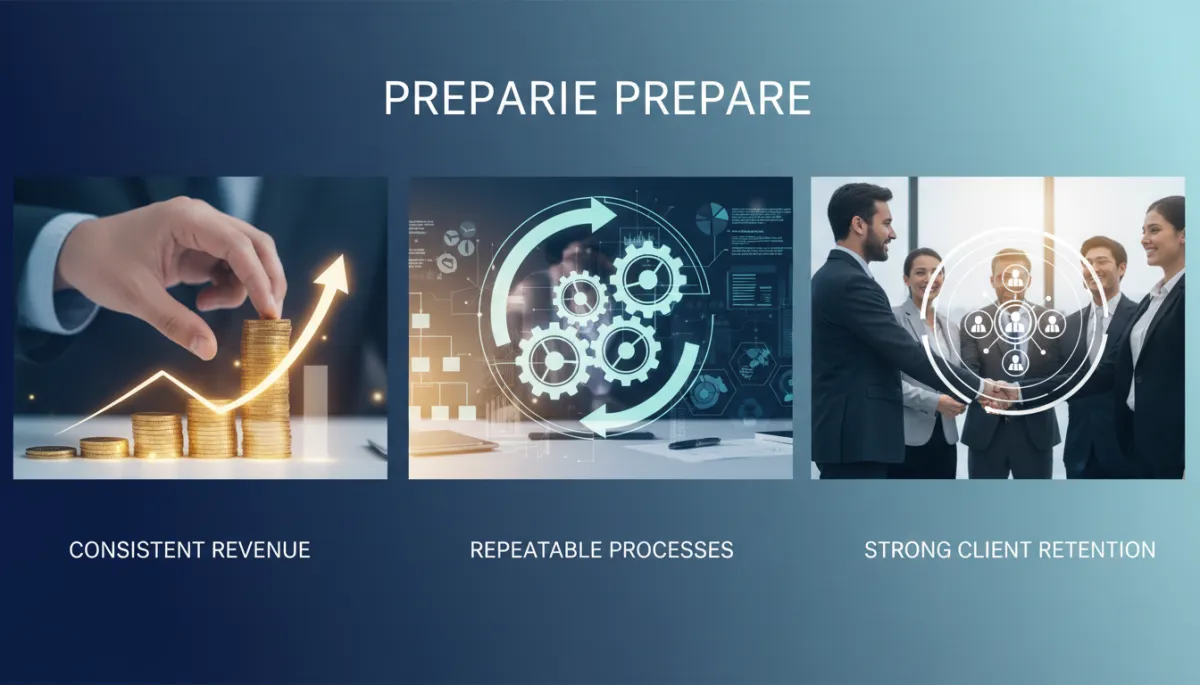
Before you hire aggressively, expand locations, or invest heavily in marketing, it is essential to confirm that three core foundations are in place: consistent revenue, repeatable processes, and strong client retention. When these are healthy, scaling becomes a matter of strategy and execution rather than survival and firefighting.
Sign 1: You Have Consistent Revenue — Not Just Occasional Spikes
Consistent revenue is one of the clearest signs that your business is ready to scale. It shows that you have a proven offer, a defined market, and a way of reaching customers that works. Scaling amplifies what already exists; if your revenue is erratic, growth efforts will amplify that volatility rather than smooth it out.
What Consistent Revenue Looks Like in Practice
- You can reasonably predict your monthly income within a realistic range, based on past performance and your current pipeline.
- A significant portion of your revenue comes from recurring or repeat business, rather than one-off windfalls or seasonal spikes alone.
- You have at least 12–18 months of financial data showing steady or gradually increasing sales, even if there are normal seasonal dips.
For a small business, “consistent” does not mean perfectly flat. It means your revenue trend is reliably upward or stable, and your cash flow can support operations, owner compensation, and a reasonable buffer for slow periods. This stability is what allows you to invest in new hires, technology, or marketing without putting the business at serious risk.
Questions to Ask About Your Revenue Before Scaling
- Can you clearly identify which products or services drive the majority of your profit, not just your sales?
- Do you rely heavily on a single client, contract, or channel for revenue? If so, scaling may increase your risk exposure instead of reducing it.
- Have you priced your offers in a way that leaves room for additional overhead, such as management, tools, and support staff, as you grow?
Sign 2: You Have Repeatable Processes, Not Just Heroic Effort
The second sign your business is ready to scale is the presence of repeatable processes. In many early-stage businesses, success depends heavily on the founder’s personal effort, knowledge, and relationships. That approach may work for a handful of clients, but it cannot support growth. To scale, you need ways of working that can be taught, repeated, and improved — even when you are not personally involved in every detail.
What Repeatable Processes Look Like
- You have documented steps for your core activities: marketing campaigns, sales conversations, onboarding new clients, delivering services, and handling support or returns.
- Different team members can follow the same process and produce consistent results, even if their personal style varies.
- You track basic performance metrics for your processes (for example, lead-to-client conversion rate, average delivery time, or error rates) and use them to make improvements.

-colored close-up of a small business team collaborating over printed process maps and...
Documented, repeatable processes are the bridge between “we know how to do this” and “any trained person on our team can do this well.” They reduce mistakes, shorten training time, and free you from being the bottleneck in every decision and task.
Where to Start Systemizing Your Business
- Identify your critical workflows. Focus first on the processes that directly impact revenue and client experience: lead generation, sales, onboarding, delivery, and support.
- Write down the “current best way.” You do not need a perfect manual from day one. Start with a simple checklist or step-by-step outline of how you currently achieve good results.
- Standardize tools and templates. Use consistent email templates, proposals, invoicing formats, and project plans so your team is not reinventing the wheel each time.
- Test and refine. Ask team members to follow the documented process and note where they get stuck. Improve the process as you go, rather than waiting for the “perfect” version.
Sign 3: You Have Strong Client Retention and Loyalty
The third major sign that your business is ready to scale is strong client retention. Winning new customers is expensive. Keeping existing customers and turning them into repeat buyers is where scaling becomes profitable. High churn — customers leaving after a short period — is a red flag that should be addressed before you pursue aggressive growth.
How to Measure Client Retention in a Small Business
- Repeat purchase rate: The percentage of customers who buy from you more than once within a set period (for example, 6 or 12 months).
- Average customer lifespan: How long, on average, a customer continues to buy from you or stay on a subscription or retainer.
- Referral rate: The percentage of new business that comes from existing customers recommending you to others.
Strong retention does not mean every customer stays forever. It means that, on balance, your clients are satisfied, see clear value, and feel confident enough in your business to continue working with you or recommend you to others. This is a powerful signal that your product or service is ready to reach more people.

-toned shot of a small business owner shaking hands with a returning client across a desk, both...
Strengthening Retention Before You Scale
- Clarify your promise. Make sure customers clearly understand what they can expect in terms of results, timelines, and communication. Misaligned expectations are a major cause of churn.
- Improve onboarding. A structured onboarding experience — welcome emails, clear instructions, and early “quick wins” — sets the tone for a long‑term relationship.
- Gather feedback. Regularly ask clients what is working, what is not, and what would make your service even more valuable. Use their input to refine your offer before you scale it.
Preparing to Scale: Building the Right Systems
Once you have consistent revenue, repeatable processes, and strong client retention, the next step is to prepare your business infrastructure for growth. At the heart of this preparation are your systems — the interconnected processes, tools, and policies that keep your operations running smoothly as volume increases.
Core Systems Every Scaling Business Needs
- Sales and CRM system: A structured way to track leads, follow‑ups, proposals, and closed deals so opportunities do not fall through the cracks as volume grows.
- Project or workflow management: Tools and processes for planning, assigning, and tracking work so your team can handle more clients without chaos or missed deadlines.
- Customer support and communication: Clear channels (such as shared inboxes, ticketing systems, or help centers) so customers receive timely, consistent responses even as your client base expands.
- Financial and reporting systems: Reliable bookkeeping, invoicing, and reporting processes that give you an accurate view of cash flow, profitability, and key performance indicators.
Turning Processes into Scalable Systems
Processes describe what you do; systems define how everything fits together. To prepare for scaling, look for ways to connect your processes into a cohesive whole. For example, leads captured through your website should automatically flow into your CRM, trigger follow‑up tasks in your project management tool, and sync with your email marketing platform. The fewer manual handoffs you rely on, the more your business can grow without constant supervision.
Preparing Your Team: People as the Engine of Scale
No matter how strong your systems are, your business scales through people. As you grow, your team becomes the engine that delivers on your promises, protects your reputation, and drives innovation. Preparing your team for scaling involves more than hiring more hands; it requires structure, clarity, and leadership.
Clarifying Roles and Responsibilities
- Define clear roles. Even in a small team, everyone should know their primary responsibilities, decision‑making authority, and how their work connects to the business’s goals.
- Identify gaps. As you look toward scaling, note which tasks are still solely on the owner’s plate. These often become bottlenecks and should be among the first responsibilities you delegate or hire for.
- Create simple org charts. Even a basic chart that outlines reporting lines can reduce confusion as you add new team members.
Building a Culture That Supports Growth
Scaling puts pressure on your culture. Workloads increase, new people join, and expectations rise. A strong culture — based on clear values, open communication, and accountability — helps your team navigate growth without burning out or losing focus on quality.
- Communicate your vision for growth and how it benefits both the business and the team.
- Establish regular check‑ins or team meetings to share updates, address concerns, and celebrate wins.
- Encourage feedback from frontline employees; they often spot operational issues before leadership does.
Hiring Strategically for Scale
When you are preparing to scale, each new hire should be made with intention. Rather than hiring reactively to put out fires, think about the capabilities you will need six to twelve months from now and plan accordingly. In many small businesses, the most impactful early hires are those who take over operations, client delivery, or sales activities that currently depend heavily on the owner.
- Start with roles that free the owner from day‑to‑day tasks, allowing more time for strategy and leadership.
- Consider a mix of full‑time, part‑time, and contract support to balance flexibility and stability as you grow.
- Build structured onboarding and training so new team members can become productive quickly without constant one‑on‑one guidance.
Leveraging Technology: Tools That Support Sustainable Growth
Technology is not a magic solution, but the right technology can significantly increase your capacity to scale. The goal is to use tools that automate repetitive tasks, centralize information, and provide visibility into your operations — without adding unnecessary complexity.
Essential Technology Categories for Scaling
- Customer Relationship Management (CRM): A CRM helps you track leads, prospects, and clients in one place, log interactions, and manage follow‑ups. For small businesses, user‑friendly tools that integrate with email and calendars are often sufficient to start.
- Project or task management: Tools that allow you to assign tasks, set deadlines, and track progress help keep work organized as your team and client load grow.
- Communication platforms: Centralized communication — through shared inboxes, messaging apps, or collaboration platforms — reduces miscommunication and keeps everyone aligned.
- Finance and accounting software: Modern accounting tools automate invoicing, expense tracking, and basic reporting, giving you real‑time visibility into your financial health.
Evaluating Technology Through a Scaling Lens
When choosing technology to support scaling, consider:
- Scalability: Can the tool handle more users, more clients, or more data without major disruptions or costs?
- Integration: Does it connect with your other key systems, reducing manual data entry and duplicate records?
- Ease of use: Will your team actually use it? A simpler tool that everyone adopts is more valuable than a complex one that no one understands.
Strengthening Your Finances: The Backbone of Any Scaling Plan
Perhaps the most critical element of scaling — and the one most often underestimated — is your finances. Growth usually requires upfront investment: hiring staff, upgrading systems, increasing inventory, or expanding marketing. Without a clear financial plan, these investments can strain cash flow and create unnecessary risk.
Building a Financial Foundation for Growth
- Clean, up‑to‑date books: Accurate financial records are non‑negotiable. If your bookkeeping is months behind, fix this before you attempt to scale. You cannot make sound decisions without reliable numbers.
- Cash flow forecasting: Project your cash inflows and outflows over the next 6–12 months, factoring in planned investments. This helps you see when you might experience shortfalls and plan accordingly.
- Profitability by product or service: Understand which offers drive the most profit, not just revenue. Scaling low‑margin offerings can increase your workload without significantly improving your bottom line.

-toned overhead view of a small business owner analyzing financial reports and a laptop...
Funding Your Scaling Efforts
There are several ways to fund growth, and the right mix depends on your business model, risk tolerance, and goals:
- Self‑funding (bootstrapping): Reinvesting profits gives you maximum control but may limit how quickly you can scale. It is often the most sustainable approach for service‑based small businesses.
- Lines of credit or loans: Strategic use of credit can smooth cash flow during growth, especially when you have predictable receivables. However, it should be paired with a realistic repayment plan and conservative assumptions.
- Equity or investment: For certain businesses, outside investors can accelerate growth, but they also come with expectations and a loss of some control. This path requires careful consideration and professional advice.
Bringing It All Together: A Practical Checklist for Scaling Readiness
To move from theory to action, it can be helpful to summarize your readiness to scale across the seven key areas discussed: consistent revenue, repeatable processes, strong client retention, systems, team, technology, and finances. Use the checklist below as a starting point for an honest assessment.
| Area | Key Question | Ready to Scale? |
|---|---|---|
| Consistent Revenue | Can we reliably predict revenue and support growth investments? | Yes / No / Needs Work |
| Repeatable Processes | Are our core workflows documented and followed consistently? | Yes / No / Needs Work |
| Client Retention | Do clients stay, buy again, and refer others? | Yes / No / Needs Work |
| Systems | Are our processes connected into reliable, scalable systems? | Yes / No / Needs Work |
| Team | Do we have the right people and structure to handle more volume? | Yes / No / Needs Work |
| Technology | Do our tools support automation, integration, and visibility? | Yes / No / Needs Work |
| Finances | Can our cash flow and profitability support sustainable growth? | Yes / No / Needs Work |
Conclusion: Scale with Intention, Not Just Ambition
Scaling a small business is not about chasing growth at any cost. It is about building on a solid foundation — consistent revenue, repeatable processes, and strong client retention — and then deliberately strengthening your systems, team, technology, and finances to support the next stage. When these pieces are in place, growth becomes far less chaotic and far more rewarding.
As a small business owner, you do not need to have everything perfect before you scale, but you do need to be honest about where you stand today. Use the signs and preparation steps in this guide to identify your strengths, address your gaps, and create a realistic plan for the future. With intention, clarity, and the right foundations, your business can grow in a way that supports your clients, your team, and your long‑term vision — not just your top‑line numbers.
The decision to scale is ultimately a leadership choice. When you can confidently say that your revenue is stable, your operations are repeatable, your clients are loyal, and your infrastructure is ready, you are not just chasing growth — you are building a business that can thrive at the next level and beyond.
