
Google's May 2026 Core Update: Data-Driven Strategy
SEO, Google Core Update, Search Console, Analytics Engineering
Google’s May 2026 Core Update Is Done: A Calm, Data-First Plan for Agencies and Clients
As of June 2, 2026, at 5:40 a.m. PT, Google has officially confirmed the May 2026 Core Update is fully rolled out. For businesses and agencies, this is the point where emotion needs to give way to instrumentation, measurement, and disciplined iteration—not panic rewrites. Here’s a pragmatic, engineering-style plan for what to do next.
First, Confirm the Timeline: The Update Really Is Finished
Google kicked off the May 2026 Core Update on May 21 at roughly 8:40 a.m. PT and confirmed completion at 5:40 a.m. PT on June 2—about 11 days and 21 hours later (Search Engine Journal, SERoundtable). This was a global, all-languages core update, not a niche tweak or a penalty wave. It’s a system-wide reweighting of signals to better surface relevant, satisfying content.
Complicating things, the rollout overlapped with Google’s AI-first shift in Search—AI Mode powered by Gemini 3.5 Flash and expanded AI Overviews. That means some of what your clients are seeing is core update turbulence; some is AI features absorbing clicks. Diagnosing which is which requires careful use of data, not gut feelings.
Understanding the Volatility: Where Things Got Bumpy
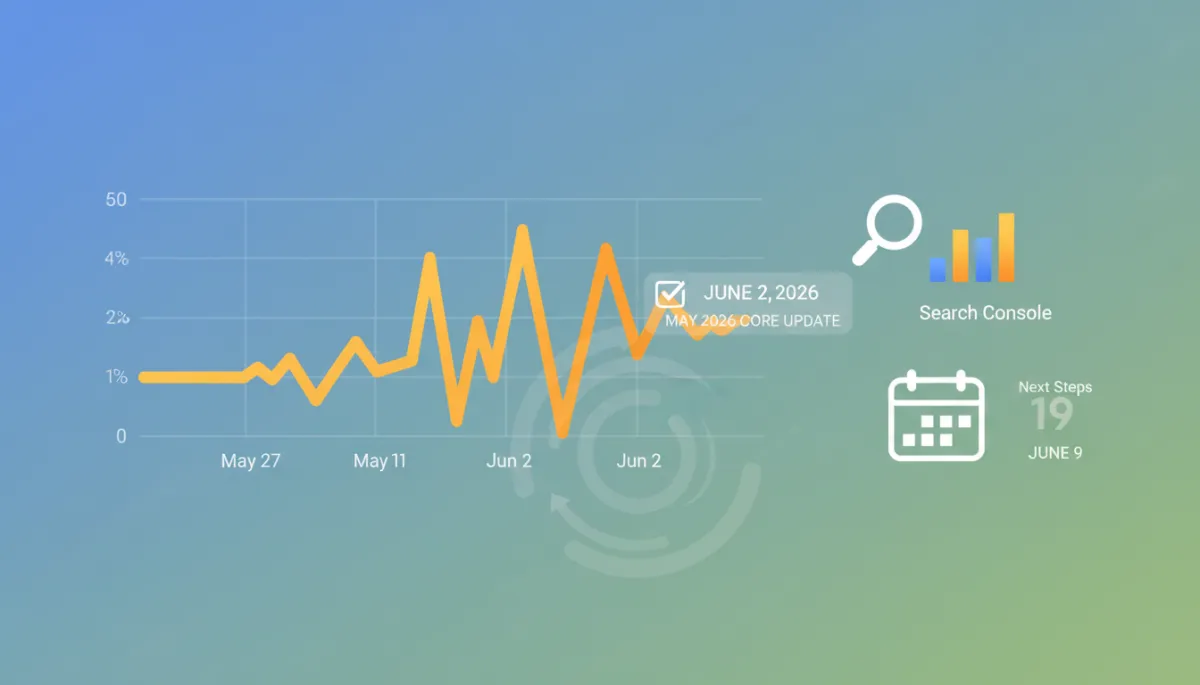
Monitoring tools like Semrush, Sistrix, and others reported elevated turbulence across the entire rollout, but the most intense swings clustered late in the process. From roughly May 27 through June 2, volatility spiked—many trackers logged their highest scores since late 2025, and SEOs reported dramatic weekend surges and drops across YMYL, affiliate, and AI-heavy content verticals (Bits From Bytes, AEO Optimization).
In engineering terms, the system just went through a major reindexing and signal recalibration. You should expect a “ringing” effect—oscillations—before it settles into a new equilibrium. Now that the rollout is confirmed complete, rankings are expected to stabilize over the next several days. You may still see minor day‑to‑day noise, but those wild, 20–40% swings in visibility should taper off.
📌 Key Takeaway: The May 27–June 2 window represented the highest turbulence. Plan your analysis around the period after this spike, not inside it.
For Clients Who Saw Movement: What to Do This Week (and What Not to Do)
If your clients saw significant gains or losses during the rollout, your instinct may be to “fix” things immediately. As a developer, I’d frame this as: don’t refactor the entire system while the deployment pipeline is still flushing caches. You need clean, post‑update data before you touch production content at scale.
Do communicate clearly that the update is complete, and that the next 7 days are about observation and measurement.
Do triage obvious issues (e.g., technical errors, 5xxs, misconfigured redirects, robots.txt mistakes) immediately—those are bugs, not “SEO tweaks.”
Do not approve wholesale content rewrites, title rewrites, or URL restructures before you have a stable baseline.
⚠️ Warning: Reactive rewrites during the stabilization window can mask what the core update actually did, making it harder to debug and harder to recover.
Why June 9 Is Your First Real Checkpoint
Google and multiple industry analyses recommend waiting at least a week after completion before drawing conclusions (Search Engine Journal). With the update confirmed done on June 2, that puts your first serious evaluation window at June 9.
Think of it like waiting for logs and metrics to fill in after a major infrastructure change. Looking at June 3 data in isolation is like reading the first 10 lines of a 1,000‑line log file and declaring the incident resolved (or catastrophic). You need a full week of post‑update traffic patterns to distinguish:
Normal seasonality or day‑of‑week effects
Ongoing AI Overviews and AI Mode click displacement
Structural changes in rankings from the core update itself
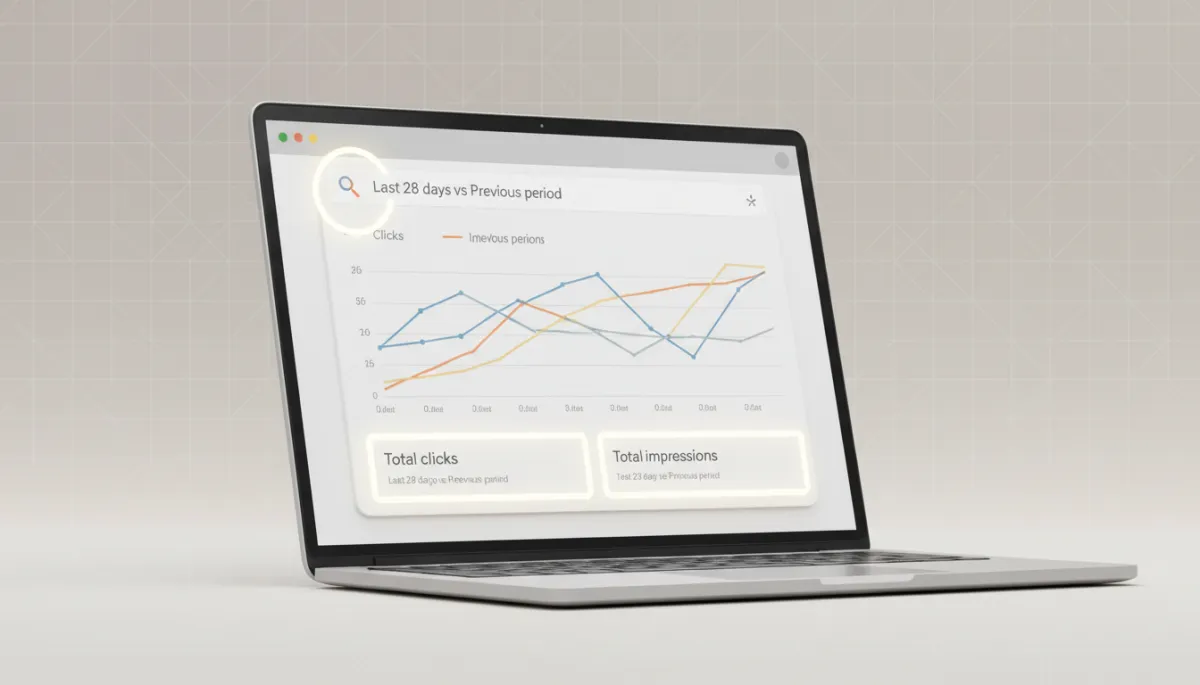
-toned screenshot-style of Google Search Console performance report on a laptop, with date...
Date comparisons in Search Console turn volatility into measurable, explainable trends.
How to Use Search Console: 30 Days Before vs. 30 Days After
Once you’re past June 9, you can start doing meaningful comparisons. For most clients, a solid pattern is: compare the 30 days before May 21 to the 30 days after June 9. That gives you:
A clean “pre‑update” window: April 21–May 20
A clean “post‑stabilization” window: June 10–July 9 (once those dates have passed)
In Google Search Console’s Performance report:
Open Search results and click the Date filter.
Choose Compare → Custom.
Set Range 1 to April 21–May 20 and Range 2 to June 10–July 9 (when available).
Analyze changes in impressions, clicks, CTR, and average position at the query, page, and country level.
💡 Pro Tip: If impressions are flat or up but clicks are down, you’re likely seeing AI Overviews and AI Mode siphon clicks—not a pure ranking loss.
Automating Comparisons: A Developer-Friendly Example
If you manage many sites or want repeatable reporting, treat this like any other analytics pipeline. Use the Search Console API to pull the two 30‑day windows and compare them programmatically.
Running this kind of automation lets you walk into client meetings with a ranked list of pages that lost or gained the most, backed by hard numbers instead of screenshots and anecdotes. You can also extend this to group by directory (e.g., /blog/ vs. /product/) to see which content types were most affected.
Resist the Urge to Rewrite Everything Right Now
One of the worst patterns I see—especially in high‑pressure agency environments—is the “reactive rewrite.” Rankings dip, and suddenly every title, H1, and paragraph gets rewritten in a week. From a systems perspective, that’s like debugging by randomly changing code until the tests pass. You lose the ability to attribute cause and effect, and you often make things worse.
Avoid mass content overhauls before you’ve done the 30‑day vs. 30‑day comparison.
Avoid chasing every minor day‑to‑day ranking change—those are often just noise as the index settles.
Focus instead on structural quality: E‑E‑A‑T, originality, depth, and user satisfaction, as Google has reiterated for every recent core update.
When you do change content, treat it like a controlled deployment:
Identify a small, representative set of underperforming pages.
Improve them with clear hypotheses (e.g., “add first‑party data,” “clarify authorship,” “consolidate thin variants”).
Measure again over several weeks—recovery often aligns with the next core update, not the next day.
Setting Expectations: Rankings Will Settle, but Not Snap Back Overnight
For the next few days, you should expect rankings to gradually stabilize as the dust from the May 27–June 2 turbulence settles. That doesn’t mean every site will “return to normal”—some will have structurally higher or lower visibility than before. But the chaotic swings should reduce, giving you a consistent baseline to work from.
Communicate this clearly to stakeholders:
The update is done as of June 2, 5:40 a.m. PT.
We’re in a short stabilization window; rankings should calm over the next several days.
June 9 is the earliest reasonable date to start drawing conclusions from the data.
Meaningful, data‑driven changes will be based on 30‑day pre‑ vs. post‑comparisons in Search Console, not on hunches.
Final Thoughts: Treat SEO Like an Engineering System, Not a Slot Machine
For agencies and in‑house teams, the May 2026 Core Update is another reminder that rankings are “rented, not owned.” The winning posture is the same one we use in software engineering: instrument everything, avoid knee‑jerk changes during instability, and iterate based on clear data and hypotheses.
Over the coming weeks, your job isn’t to out‑guess Google’s algorithm; it’s to build content and experiences that are undeniably useful, technically sound, and well‑documented in your data. Start with June 9 as your first checkpoint, run the 30‑day comparisons, and then make deliberate, testable improvements instead of reactive rewrites. That’s how you turn a volatile core update into a structured opportunity to harden your search strategy for the long term.
