

Hyper-Personalization: Elevating Client Engagement
Customer Experience, Personalization, Behavioral Data
Hyper-Personalization: The New Standard in Client Engagement
Hyper-personalization is reshaping how brands communicate, sell, and support. By using real-time behavioral data instead of static segments, companies can create experiences that feel less like marketing and more like genuine, one-to-one service. This article explores what hyper-personalization really is, how behavioral data powers it, and how organizations can adopt it responsibly and effectively.
From Personalization to Hyper-Personalization: What Changed?
Traditional personalization is familiar: using a first name in an email, recommending products based on broad categories, or sending a birthday discount. It relies heavily on static data such as age, location, and basic purchase history. Helpful, but often generic.
Hyper-personalization goes several steps further. It uses real-time behavioral data — what people click, browse, ignore, abandon, search for, and return to — to shape the experience at every interaction. Instead of “people like you bought this,” it becomes “based on what you just did, here is what you probably need right now.”
📌 Key Takeaway: Hyper-personalization is not just “better targeting.” It is a continuous, behavior-driven dialogue with each individual client.
The Behavioral Data Behind Hyper-Personal Experiences
Behavioral data is any information that captures what people actually do when they interact with your brand. Unlike demographic data, it reflects intent, preferences, and context in the moment. The richer this picture, the more precisely you can tailor experiences that feel surprisingly relevant — and surprisingly human.
Key Types of Behavioral Data
Browsing behavior: pages viewed, time on page, scroll depth, navigation paths, search queries, and on-site clicks reveal what a person is trying to understand or compare.
Engagement signals: email opens and clicks, push notification interactions, content downloads, webinar attendance, and social interactions show which topics and formats resonate most.
Transactional behavior: purchase frequency, basket composition, upgrade patterns, and contract renewals indicate value, loyalty, and readiness for the next step in the relationship.
Channel preferences: whether a client reliably responds via email, SMS, in-app messages, or live chat guides how and when to reach out without feeling intrusive.
Support interactions: tickets, chat logs, call summaries, and self-service usage expose pain points, expectations, and opportunities to be proactively helpful.
💡 Pro Tip: Start by mapping the behaviors that most reliably precede a purchase, a churn event, or a high-value action. These are the moments where personalization will matter most.
How Behavioral Data Creates More Relevant Client Experiences
When behavioral data is captured and interpreted responsibly, it becomes the foundation for experiences that feel tailored, timely, and considerate. Instead of broad assumptions, you respond to the actual signals clients send through their actions. Below are concrete ways behavioral data translates into more relevant engagement.
1. Anticipating Needs Before Clients Ask
Consider a client who repeatedly views your pricing page, compares features, and reads case studies about implementation support. Their behavior signals hesitancy around cost and onboarding. A hyper-personalized response might be:
An email offering a short, tailored ROI calculator based on their industry and company size.
A prompt in-app to schedule a 20-minute consultation focused purely on rollout and change management, not a generic product demo.
In both cases, you are not guessing. You are reading clear behavioral clues and responding with information that truly helps them move forward, which dramatically increases conversion and satisfaction.
2. Tailoring Content to Real-Time Interests
Behavioral data allows you to move beyond static nurture tracks. Suppose a prospect originally engaged with high-level thought leadership but suddenly spends time on implementation guides and comparison articles. Their behavior suggests they are moving from awareness to evaluation.
Your next email can automatically surface a concise checklist for vendor selection instead of another broad trend report.
The website homepage can reconfigure to feature case studies from similar companies, rather than generic brand messaging.
By aligning content with the client’s current mindset, you demonstrate that you understand where they are in their journey and what they need next — not what your campaign calendar says you should send.
3. Personalizing Offers Based on True Value and Timing
Discounting and cross-sell campaigns often fail because they are poorly timed or irrelevant. Behavioral data changes this by showing:
When a client routinely repurchases a consumable product, allowing you to offer a subscription or refill reminder just before they run out.
When a software user frequently hits the limits of their current plan, making an upgrade suggestion natural rather than pushy.
Instead of blanket promotions, you present offers that clearly solve a problem the client is already experiencing, which feels like service, not sales pressure.
4. Adapting Channels and Cadence to Client Preferences
Behavioral data also reveals how often and where clients want to hear from you. If a client consistently opens monthly newsletters but ignores weekly promotional emails, you can reduce frequency and shift toward the format they clearly prefer. If another client responds quickly to in-app messages but rarely checks email, your outreach can follow suit.
This reduces fatigue, respects attention, and makes clients feel that your brand “gets” them — a critical ingredient in long-term loyalty.
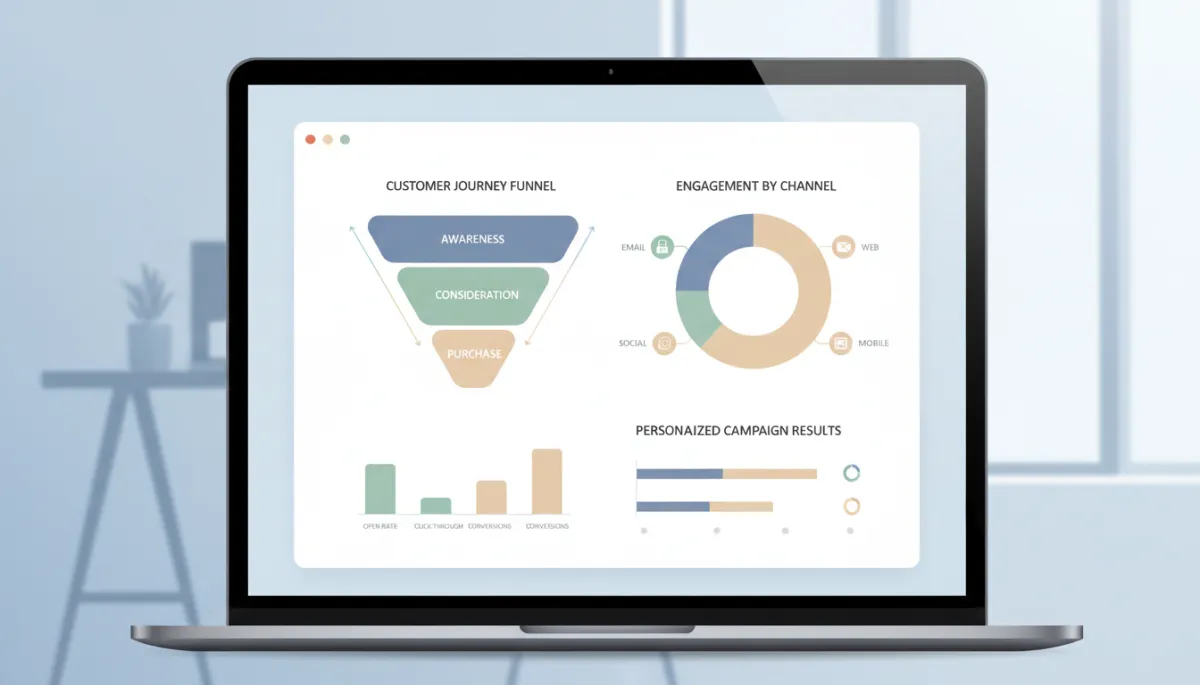
Behavioral insights help teams adjust content, offers, and channels in near real time.
5. Powering Proactive, Not Reactive, Customer Support
When behavioral signals show that a client is struggling — repeated failed logins, abandoned onboarding steps, or frequent visits to the same help article — hyper-personalization enables your support team to reach out before frustration turns into churn.
Triggered in-app guidance can appear at the exact step where users most often drop off, offering a short video or walkthrough tailored to that task.
A success manager can receive alerts about high-value accounts showing early signs of disengagement, enabling timely, human outreach.
This kind of support experience tells clients, “We are paying attention, and we are here to help,” which builds trust far more effectively than a scripted satisfaction survey after the fact.
Real-World Examples of Hyper-Personalization in Action
Retail: Turning Browsing Behavior into Conversion
A fashion retailer tracks browsing behavior across its website and app: which categories customers linger on, which sizes they filter for, and which items they add to wish lists. Instead of sending a generic “New arrivals” email, they build a hyper-personalized lookbook for each customer:
Styles in the customer’s preferred fit and price range, drawn from their past browsing and purchase behavior.
Complementary items based on what similar customers tend to buy together, but filtered to match the individual’s color and style history.
The result is an experience that feels like a personal stylist, not a mass mailing. Conversion rates rise, returns fall, and customers feel seen rather than targeted.
Financial Services: Context-Aware Advice and Alerts
A bank uses behavioral data from its app: how often clients check their balance, whether they explore savings tools, and which educational articles they read. For a client who frequently views content about budgeting and debt reduction, the bank can:
Offer a personalized spending summary at the end of each week, with gentle suggestions tailored to their top spending categories.
Proactively highlight a lower-interest consolidation option when their credit utilization spikes, instead of promoting generic loan products.
In this context, hyper-personalization feels like responsible guidance, not aggressive upselling — a crucial distinction in a trust-sensitive industry.
B2B SaaS: Aligning Engagement with Adoption Journeys
A B2B software company monitors product usage: which features new customers explore in the first 30 days, how often they log in, and where they encounter friction. Instead of sending the same onboarding emails to every account, they create dynamic journeys based on behavior:
Power users receive advanced tips, integration guides, and invitations to beta programs that match their exploratory behavior.
Accounts with low login frequency are nudged with short, focused tutorials on just one high-impact feature, based on what similar customers found most valuable early on.
By aligning communication with real adoption patterns, the company reduces churn, accelerates time to value, and makes customers feel supported rather than overwhelmed.
Building a Hyper-Personalization Capability: Practical Steps
1. Start with Clear Experience Goals, Not Just Data Ambitions
Hyper-personalization is not about collecting every possible data point. It is about improving specific client experiences. Begin by defining a small number of high-value use cases:
Reduce onboarding drop-off by offering tailored guidance at key steps.
Increase adoption of a flagship feature through intelligent in-product prompts.
Improve renewal rates by predicting and addressing early signs of disengagement.
With clear goals, you can work backward to identify which behavioral data is truly necessary and how it should inform messaging, design, and service.
2. Unify Data Across Channels into a Single View of the Client
Most organizations have behavioral data scattered across analytics tools, email platforms, CRM systems, and product logs. Hyper-personalization requires a unified view so you can recognize the same person as they move from channel to channel.
Whether through a customer data platform, a CRM with strong integration capabilities, or a central data warehouse, the goal is the same: consolidate behavioral signals into profiles that marketing, sales, and service teams can all act on consistently.
3. Translate Behavioral Signals into Actionable Rules and Journeys
Data alone does not create better experiences. You need clear logic that connects behaviors to personalized responses. Common patterns include:
Triggers: “If a user abandons a cart with more than three items, send a reminder with alternative options in 24 hours.”
Dynamic content: “If a visitor has engaged with beginner-level content, show introductory guides on the homepage; if they have consumed advanced content, highlight expert resources instead.”
Predictive scores: “If churn risk exceeds a threshold based on recent behavior, alert the account owner and enroll the client in a proactive success campaign.”
💡 Pro Tip: Start with simple, transparent rules. As you learn what works, you can layer in more advanced models without losing clarity or control.
4. Measure Relevance, Not Just Volume
Hyper-personalization should be judged by how useful clients find your interactions, not how many messages you send. Look beyond opens and clicks to metrics that signal real relevance:
Time spent engaging with recommended content or features.
Reduction in support tickets for issues addressed by proactive guidance.
Client feedback that references feeling “understood,” “supported,” or “guided” in surveys and conversations.
These qualitative and behavioral indicators show whether your personalization efforts are genuinely enhancing the client experience, not just optimizing campaign metrics.
Ethics, Privacy, and Trust: The Foundation of Responsible Hyper-Personalization
Hyper-personalization walks a fine line. Done well, it feels like a concierge who anticipates your needs. Done poorly, it can feel invasive or manipulative. Behavioral data is powerful, and with that power comes responsibility.
Be Transparent About What You Collect and Why
Clients are more willing to share data when they understand how it will benefit them. Clear privacy notices, preference centers, and plain language explanations build confidence. Instead of hiding tracking behind legal jargon, explain that you use behavioral data to reduce irrelevant messages and improve support — and then follow through on that promise.
Give Clients Control Over Their Experience
Hyper-personalization should be something clients can opt into, shape, and opt out of. Offer granular controls over:
Which channels they prefer and how often you can contact them.
Whether their behavioral data can be used for personalized offers or only for essential service improvements.
When clients feel in control, personalization becomes a service they are choosing, not a tactic being applied to them.
Design for Empathy, Not Exploitation
At its best, hyper-personalization is an expression of empathy: using behavioral data to understand what clients are trying to achieve and making that easier. Resist the temptation to use insights purely to maximize short-term revenue. If a client’s behavior suggests financial stress, for example, a responsible brand offers relief options, not more credit.
📌 Key Takeaway: The most sustainable competitive advantage in hyper-personalization is trust. Without it, even the most advanced behavioral models will backfire.
The Future of Client Engagement Is Behavior-Led and Human-Centered
Hyper-personalization is quickly becoming the new baseline for client engagement. As more brands adopt behavioral data and real-time personalization, generic experiences will feel increasingly out of step with client expectations. Yet technology alone is not the differentiator. The real advantage lies in how thoughtfully you apply it.
Organizations that succeed will be those that treat behavioral data as a way to listen more closely — to understand context, reduce friction, and communicate with relevance and respect. They will design experiences that feel less like automated funnels and more like ongoing, helpful relationships.
In that sense, hyper-personalization is not just a marketing strategy. It is a new standard for how companies show up for their clients: attentive, responsive, and deeply aligned with what people actually do and need in each moment.
