
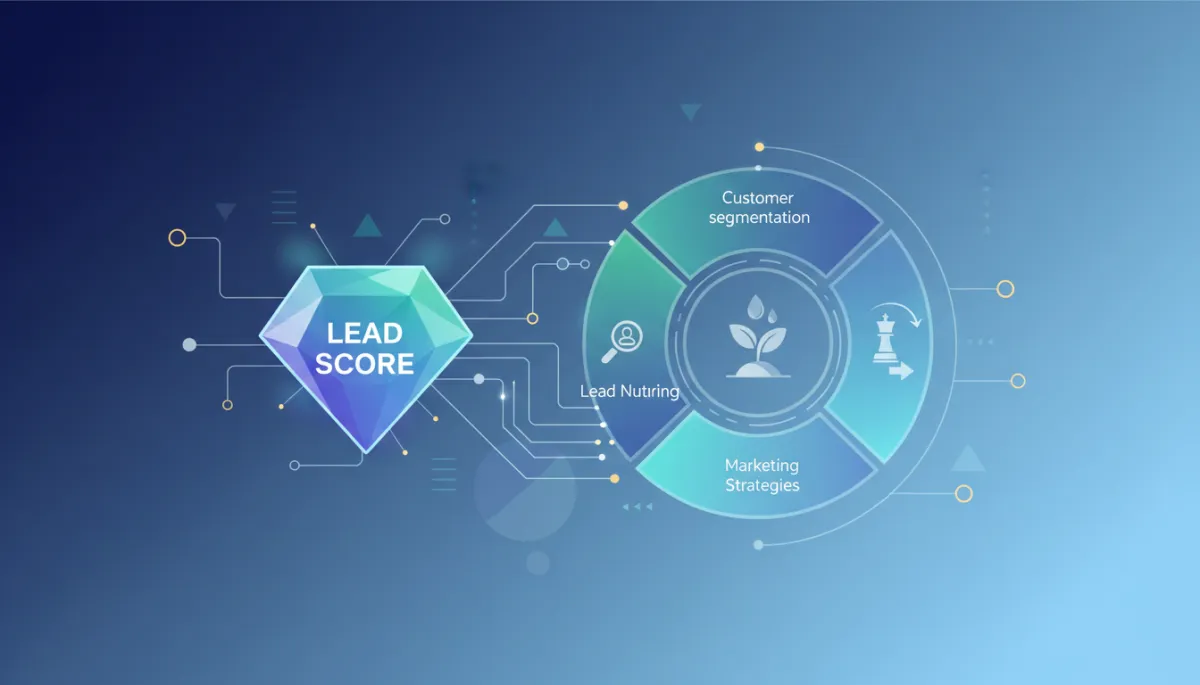
Lead Scoring & Segmentation for Better Conversions
Marketing Strategy, Lead Scoring, Customer Segmentation, Lead Nurturing
Lead Scoring for Customer Segmentation and Lead Nurturing
Discover how structured lead scoring, intelligent customer segmentation, and strategic lead nurturing work together to prioritize opportunities, personalize engagement, and drive higher conversion rates across your marketing and sales funnel.
What Are Lead Scoring and Customer Segmentation?
Understanding Lead Scoring and Its Role in Modern Marketing
Lead scoring is a structured method for ranking prospects based on their likelihood to become customers. By assigning numerical values to attributes such as demographics, firmographics, engagement behavior, and buying intent, marketing and sales teams gain a shared view of which leads deserve immediate attention, which require nurturing, and which should be deprioritized for now. A well-designed lead scoring model transforms a long, undifferentiated list of contacts into a prioritized pipeline aligned with revenue potential, not guesswork or intuition.
Effective lead scoring typically blends explicit data, such as company size, role, and industry, with implicit signals, such as website visits, content downloads, webinar attendance, and email engagement. When these inputs are calibrated against historical conversion patterns, the model becomes a powerful decision-support tool that helps teams focus time, budget, and effort where it matters most. In doing so, lead scoring strengthens pipeline quality, improves forecast accuracy, and supports more predictable growth.
The Strategic Value of Customer Segmentation in Lead Nurturing
Customer segmentation is the practice of grouping leads and customers into meaningful categories based on shared characteristics. These characteristics may include demographic factors, firmographic traits, behavioral patterns, purchase history, or stage in the buying journey. Rather than communicating with a broad, undifferentiated database, segmentation allows marketing teams to deliver tailored messages, relevant offers, and timely content that speaks directly to the needs of each audience group. This relevance is essential in lead nurturing, where trust, education, and perceived value determine whether a prospect progresses or disengages.
When segmentation is aligned with lead scoring, organizations gain a dual lens on their pipeline. Score indicates how ready a prospect may be to buy, while segment clarifies who they are, what they care about, and which challenges they are trying to solve. Together, these insights guide the design of nurturing workflows, content tracks, and sales outreach sequences that feel personalized, not generic. The result is higher engagement, more qualified conversations, and stronger conversion rates across the funnel.
Best Practices for Lead Scoring and Segmentation Models
Building effective lead scoring and segmentation models requires more than assigning arbitrary points or creating overly broad segments. It demands a disciplined, data-informed approach that reflects your ideal customer profile, your sales cycle, and your strategic priorities. Begin by aligning stakeholders on the definition of a qualified lead, including both marketing-qualified (MQL) and sales-qualified (SQL) criteria. Then, identify the attributes and behaviors that historically correlate with closed-won deals, and weight them accordingly within your scoring model. This ensures your framework is grounded in evidence, not assumptions.
For segmentation, avoid creating so many micro-segments that campaigns become unmanageable, yet do not rely on a single broad list that ignores meaningful differences between prospects. Focus on segments that influence messaging, channel selection, and offer strategy, such as industry vertical, buying role, company size, or engagement level. Regularly test and refine both your scoring thresholds and segment definitions based on performance data, feedback from sales, and evolving market conditions. This iterative approach keeps your models accurate, actionable, and aligned with business objectives over time.
Optimizing Lead Generation with Smarter Segmentation
Segmentation is not only valuable after leads enter your database; it also enhances the quality of lead generation at the top of the funnel. By defining clear audience segments before launching campaigns, you can refine targeting parameters, keyword strategies, and creative angles to attract the right prospects from the outset. Paid media, content syndication, and social campaigns become more efficient when they are designed for specific segments, rather than a generic “anyone who might be interested” audience. This focus reduces wasted spend, improves lead quality, and supports more accurate lead scoring downstream.
Once leads are captured, segments can be used to route them into differentiated onboarding paths. For example, enterprise buyers may receive a consultative content journey focused on ROI, security, and integration, while small businesses might receive concise guides, pricing calculators, and quick-start resources. Each of these segments can also be scored differently, recognizing that the signals of buying intent vary by persona and use case. Over time, this integrated approach to segmentation and scoring elevates both the volume and the value of opportunities entering your pipeline.
Types of Leads and Their Role in Segmentation
Not all leads carry the same potential, timeline, or needs. Differentiating between lead types is essential for meaningful segmentation and accurate lead scoring. Common categories include cold leads, who have shown minimal engagement; marketing-qualified leads, who meet defined criteria and demonstrate interest; sales-qualified leads, who are ready for direct sales conversations; and product-qualified or trial users, who have experienced your solution firsthand. Each type requires distinct messaging, offers, and follow-up cadences to progress effectively through the funnel.
Segmenting by lead type also helps teams avoid misalignment and frustration. When sales receives leads labeled as “qualified” that do not meet expectations, trust erodes, and conversion rates suffer. A transparent framework that defines each lead type, supported by clear scoring thresholds and behavioral criteria, ensures that segments reflect reality. This clarity enables marketing to design nurturing sequences that move leads from one category to the next, while sales can confidently prioritize outreach to the segments most likely to convert in the near term.

Unified scoring and segmentation dashboards give teams clarity on which leads to prioritize next.
Why Lead Scoring and Segmentation Are Essential for Businesses
Qualifying Leads with Precision, Not Assumptions
In many organizations, lead qualification still relies on subjective judgment or incomplete information. Lead scoring and segmentation introduce structure, transparency, and consistency to this critical step. By quantifying engagement and fit, teams can distinguish between curious visitors, early-stage researchers, and high-intent decision-makers. Segmentation then contextualizes those scores, indicating which verticals, use cases, or roles are most represented among high-value leads. This combination reduces the risk of overlooking strong opportunities and minimizes time spent on low-potential contacts that are unlikely to convert.
Precise qualification also improves the experience for prospects. When leads are properly scored and segmented, they receive communication that reflects their stage and interests, rather than generic blasts or premature sales pitches. This builds trust, demonstrates respect for their time, and positions your brand as a thoughtful partner in their decision-making process. Over time, this professional, relevant approach becomes a competitive advantage that differentiates your organization in crowded markets.
How Lead Nurturing Strategies Enhance Segmentation Efforts
Lead nurturing is the process of building relationships with prospects over time through relevant, timely interactions. When grounded in robust segmentation, nurturing becomes significantly more effective. Instead of sending the same sequence to every contact, you can design nurturing programs tailored to specific industries, pain points, product interests, or buying roles. Each segment receives content and offers that address their context, from technical deep dives for practitioners, to strategic outcomes for executives, to implementation guidance for operations teams.
Lead scoring further refines these nurturing strategies by signaling when a prospect may be ready for a new type of interaction. For example, a surge in engagement with pricing pages, product comparisons, or case studies may trigger a shift from educational content to consultative outreach. Conversely, declining engagement scores may prompt a re-engagement campaign or a shift back to higher-level thought leadership. By integrating scoring and segmentation into your nurturing design, you create adaptive journeys that respond to real behavior, rather than rigid, one-size-fits-all workflows.
Optimizing Sales and Marketing Performance Through Alignment
Lead scoring and segmentation are powerful tools for aligning sales and marketing teams around shared goals, metrics, and definitions. When both teams agree on what constitutes an MQL, which segments are strategic priorities, and how scores translate into handoff criteria, friction decreases, and collaboration improves. Marketing can design campaigns that generate the types of leads sales values most, while sales can provide feedback on lead quality, messaging resonance, and segment performance. This closed loop enables continuous refinement of both scoring models and segmentation logic.
Operationally, this alignment leads to more efficient pipeline management. High-scoring leads in priority segments can be routed directly to sales, while lower-scoring or early-stage leads remain in nurturing programs. Account executives gain visibility into a prospect’s engagement history, segment membership, and key interests before the first conversation, allowing them to tailor outreach and ask more relevant questions. Over time, this disciplined approach shortens sales cycles, increases win rates, and elevates the overall return on marketing investment.
Improving Conversion Rates with Data-Driven Lead Management
The ultimate objective of any lead management strategy is to improve conversion rates, from initial engagement through to closed revenue. Lead scoring and segmentation provide the data foundation required to achieve this outcome. By analyzing which scores and segments convert most frequently, at what velocity, and through which channels, organizations can refine their marketing strategies with confidence. Underperforming segments can be re-evaluated, messaging can be adjusted, and resources can be redirected toward higher-yield opportunities, rather than relying on anecdotal impressions or isolated campaign results.
In addition, conversion analysis across segments can reveal new opportunities for product positioning, pricing, and packaging. For example, if mid-market technology firms in a particular region consistently convert at higher rates after engaging with specific types of content, you can design targeted campaigns and offers that replicate that success. Similarly, if certain segments generate volume but little revenue, you can adjust targeting criteria, refine qualification rules, or develop specialized nurturing tracks that address their unique objections and decision drivers.
How to Implement Lead Scoring and Customer Segmentation
Building a Successful Lead Scoring and Segmentation Framework
Implementing lead scoring and customer segmentation begins with a clear understanding of your ideal customer profile and your current funnel dynamics. Start by mapping your existing buyer journey, from initial awareness through evaluation, purchase, and renewal. Document the touchpoints that typically influence progression, such as content interactions, events, sales conversations, and product experiences. Then, collaborate with sales, marketing, and customer success leaders to identify the attributes that distinguish high-value customers from low-fit or low-intent contacts. These insights form the foundation of your initial scoring and segmentation models.
Next, translate these insights into practical rules. Assign point values to behaviors that indicate engagement and intent, such as repeated website visits, high-value content downloads, or direct inquiries. Balance these with negative scores for disqualifying factors, such as non-target industries or roles outside your buying committee. For segmentation, define a manageable set of segments that reflect strategic priorities, including verticals, company sizes, regions, or primary use cases. Document these rules clearly, and ensure they are implemented consistently across your marketing automation platform and CRM.
Leveraging Marketing Automation for Lead Scoring and Segmentation
Marketing automation platforms are central to executing lead scoring and segmentation at scale. They collect behavioral data from emails, landing pages, forms, and digital campaigns, then apply scoring rules and segment logic in real time. This automation ensures that leads are evaluated consistently, regardless of volume, and that they are routed into appropriate nurturing workflows without manual intervention. It also enables dynamic segmentation, where contacts can move between segments as their behavior, profile, or lifecycle stage changes over time.
To fully realize the value of automation, integrate your scoring and segmentation frameworks with campaign design. For example, trigger specific email sequences when leads cross a defined score threshold, or enroll contacts in industry-specific journeys based on their segment membership. Use conditional logic to adapt messaging and cadence based on engagement signals, such as link clicks or event registrations. By embedding lead scoring and segmentation into your automation strategy, you create responsive, personalized experiences that scale without sacrificing relevance or control.
Applying Behavioral, Demographic, and Geographic Segmentation
Robust segmentation strategies typically blend three core dimensions: behavioral, demographic or firmographic, and geographic. Behavioral segmentation focuses on how leads interact with your brand, including website activity, content consumption, email engagement, and product usage. These signals are closely tied to lead nurturing, as they reveal topics of interest, urgency, and readiness to engage with sales. Demographic and firmographic data, such as job title, department, company size, and industry, help determine whether a lead fits your ideal customer profile and influences your messaging approach.
Geographic segmentation can be equally important, particularly for organizations with region-specific offerings, regulatory requirements, or sales coverage models. Location may influence language, cultural nuances, compliance considerations, and event strategies. Combining these three segmentation dimensions provides a nuanced view of each lead, enabling highly targeted campaigns. When paired with lead scoring, this multidimensional segmentation ensures that your most valuable resources are directed toward the right people, in the right markets, at the right time in their decision process.
Aligning Lead Scoring and Segmentation with Campaign Strategy
Lead scoring and segmentation deliver the greatest value when they are tightly integrated with your broader marketing strategy. Before launching campaigns, define the segments you intend to reach, the desired scoring outcomes, and the handoff criteria to sales. Design content and offers that speak to the specific challenges, priorities, and decision drivers of each segment. Establish clear measurement plans that track performance by segment and score band, rather than only at an aggregate level. This level of discipline allows you to identify which combinations of message, channel, and audience are most effective, and to iterate quickly where results fall short.
Over time, insights from your scoring and segmentation data can inform broader marketing decisions. You may discover emerging high-value segments that warrant dedicated campaigns, content hubs, or product enhancements. Conversely, you may identify segments that consistently underperform, prompting a re-evaluation of messaging, targeting, or even strategic focus. By treating lead scoring and segmentation as living components of your marketing strategy, rather than one-time projects, you maintain the agility required to respond to market shifts and evolving customer expectations.
Integrating CRM for Seamless Lead Management
A strong connection between your marketing automation platform and customer relationship management (CRM) system is essential for effective lead scoring, segmentation, and lead nurturing. CRM integration ensures that sales teams have access to up-to-date scores, segment memberships, and engagement histories within their primary workflow. It also allows marketing teams to track pipeline progression, revenue attribution, and customer lifetime value by segment and score range. This shared data foundation supports more accurate forecasting and more informed decision-making across the revenue organization.
To maximize the impact of CRM integration, establish clear data governance practices. Define which fields store scoring and segmentation data, how often they are updated, and how they should be used by different teams. Train sales and marketing users on how to interpret scores and segments, and incorporate these insights into account planning, opportunity prioritization, and renewal strategies. When CRM and marketing systems operate in concert, lead scoring and segmentation become embedded in daily operations, rather than isolated marketing exercises.
Measuring the Impact on Marketing Strategies and ROI
Effective lead scoring and segmentation do more than organize your database; they materially influence the performance of your marketing strategies and the return on your campaign investments. By tracking key metrics such as conversion rates, sales cycle length, average deal size, and retention by segment and score, you can quantify the impact of your lead management efforts. These insights highlight where targeted nurturing is driving meaningful movement, where high-scoring leads are stalling, and where additional enablement or content is required to support sales conversations.
Over time, this performance data enables continuous optimization. You can recalibrate scoring weights to reflect new buying behaviors, refine segment definitions to better mirror your evolving ideal customer profile, and reallocate budget toward the combinations of audience, channel, and message that deliver the strongest outcomes. In this way, lead scoring and segmentation become central pillars of a data-driven marketing strategy, supporting not only tactical campaign decisions but also broader portfolio, product, and go-to-market planning.
Conclusion: Turning Lead Scoring and Segmentation into a Competitive Advantage
Lead scoring, customer segmentation, and lead nurturing are not isolated tactics; they are interdependent components of a modern, high-performing marketing strategy. When thoughtfully designed and consistently executed, they enable organizations to prioritize the right opportunities, deliver relevant experiences at scale, and align sales and marketing teams around shared, measurable outcomes. Rather than relying on volume alone, you can compete on precision, personalization, and the quality of every interaction across the customer journey.
For professionals seeking to strengthen pipeline performance and improve conversion rates, the path forward is clear. Invest in building data-driven lead scoring models, define meaningful customer segments, and design nurturing programs that connect the two. Integrate these frameworks into your marketing automation and CRM systems, measure their impact rigorously, and refine them continuously. By doing so, you transform raw lead data into actionable insight, create more valuable customer relationships, and establish a durable competitive advantage in an increasingly demanding marketplace.
