
Local SEO vs. Paid Ads: Best for Small Business?
Small Business Marketing, Local SEO, Paid Advertising
Local SEO vs. Paid Ads: Which One Is Right for Your Small Business Right Now?
If you run a local business in 2026, you are competing on two fronts: showing up when people search and standing out when they are ready to buy. Local SEO and paid ads both promise visibility, but they work on different timelines, with different costs, and attract different types of customer intent. You cannot afford to guess which one to prioritize. You need a clear, practical decision.
First, Get Clear on the Core Difference
Local SEO earns visibility in organic results, map packs, and AI-generated local overviews. You are not paying per click; you are investing in assets—your website, your Google Business Profile, your reviews, and your local reputation. That investment compounds over time. Recent industry data shows Google Business Profile alone accounts for roughly one-third of local ranking signals, including AI-powered “overview” results that now appear for 60–80% of local searches (Mediasearch Group; Listuro).
Paid ads buy visibility. You pay platforms like Google, Meta, or Instagram every time someone clicks or views your ad. You can switch them on today and see traffic tomorrow. But when you stop paying, the visibility stops with it. Rising competition and inflation mean those clicks are not getting cheaper (Forbes Agency Council).
Timeline: How Fast Will You See Results?
Local SEO Timeline: 3–12 Months, Then Compounding
In 2026, local SEO is no longer “set and forget.” Google, Apple Maps, AI assistants, and tools like ChatGPT all pull from your business data, website, and reviews. With a focused 90-day action plan—optimizing your Google Business Profile, fixing your directory listings, adding hyperlocal content, and launching a review process—you can usually see early lifts in calls, direction requests, and organic visits within 60–90 days (Mediasearch Group). Strong, stable rankings and AI visibility often take 6–12 months, especially in competitive markets like legal, home services, or medical.
The trade-off is clear: local SEO is slower to start, but when it gains traction, it keeps working—even if you ease off spending. A well-optimized profile with 50+ recent reviews and accurate hours can keep generating leads for years with only light maintenance (Listuro).
Paid Ads Timeline: 24 Hours to Turn On, 30–60 Days to Dial In
Paid ads can start delivering impressions and clicks within a day of launching. If you are running a time-sensitive promotion—grand opening, seasonal sale, or new product launch—this speed is valuable. However, “profitable” results usually take 30–60 days while you test ad copy, audiences, keywords, and bidding strategies. AI-powered ad platforms help, but they still need data and budget to optimize effectively (WordStream).
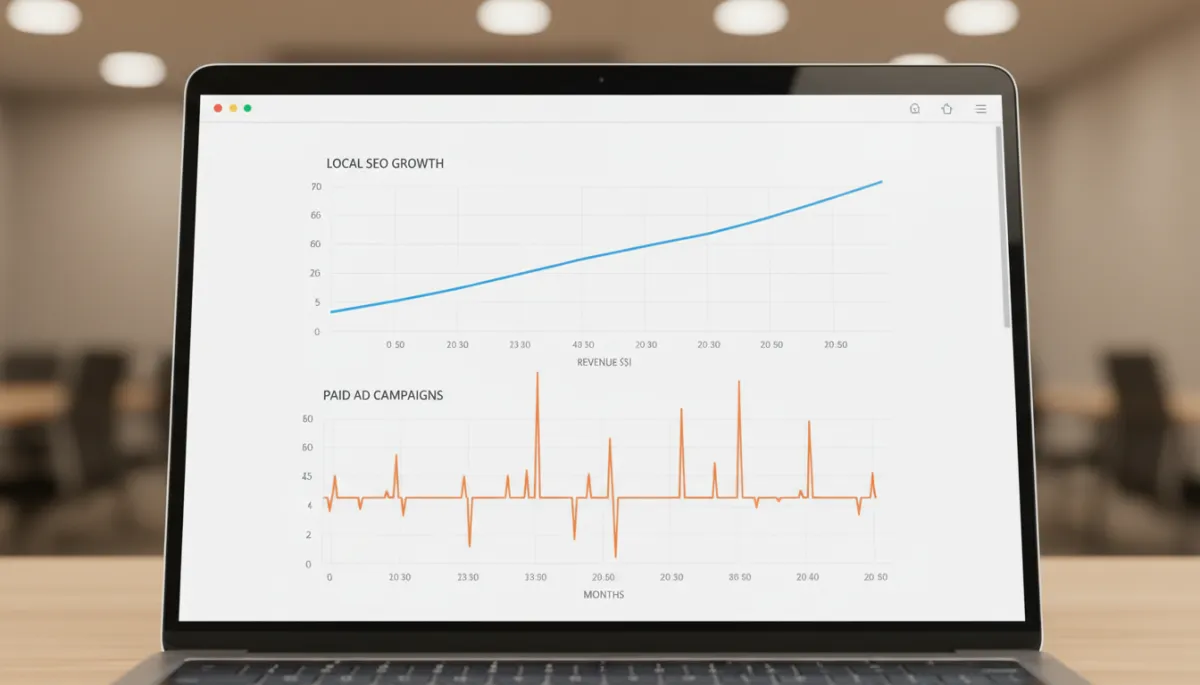
Local SEO builds a steady curve; paid ads create immediate but fragile spikes.
Cost: What Will You Actually Spend—and Over How Long?
Local SEO Costs: Upfront Work, Lower Ongoing Spend
Local SEO costs fall into two buckets: setup and ongoing. Setup includes website improvements, content creation, Google Business Profile optimization, citation cleanup, and review systems. For a typical small business, that may mean a one-time project in the low four figures or a few months of agency support. After that, you are mainly paying for content updates, occasional technical fixes, and ongoing review management. Many small businesses can keep local SEO healthy on 3–5% of revenue once the foundation is in place, especially if they handle some tasks in-house.
Importantly, every dollar you put into local SEO is building an owned asset: faster site, better content, stronger reputation, and broader AI visibility through structured data, citations, and reviews (Buarich). Those improvements continue to pay you back even if you pause active work for a quarter.
Paid Ads Costs: Flexible Budget, But Ongoing and Rising
With paid ads, your costs are direct and continuous. You pay per click, per impression, or per lead. Industry benchmarks and expert guidance suggest small businesses allocate 7–8% of revenue to marketing, with a significant portion often going to digital ads (Business News Daily). In competitive local niches, cost per click on Google Ads can easily reach $5–$30+. You also need to budget for creative production, landing page development, and management—whether in-house or via an agency.
Expect costs to keep inching up. More businesses are moving budgets into digital, and platforms are introducing advanced AI-driven targeting and automation that add value but also pressure prices upward (eMarketer). If you depend heavily on paid traffic, you are exposed to these increases every year.
Intent: What Kind of Buyer Does Each Channel Attract?
Local SEO: Capturing High-Intent “Find and Choose” Searches
Local SEO shines when someone is actively looking for what you sell. Think “plumber near me,” “best coffee shop in [city],” or “emergency vet open now.” These are not casual browsers; they are problem-aware and often ready to call, book, or visit. In 2026, AI-powered overviews and voice assistants are handling a large share of these queries, pulling from your Google Business Profile, reviews, and hyperlocal content (Listuro).
If your profile is complete, your hours are accurate, your reviews are strong and recent, and your website clearly answers local questions, you are more likely to be recommended in these AI overviews and map packs. That means you are intercepting customers exactly when they intend to choose a provider—not just when they are scrolling.
Paid Ads: Capturing Both Demand and Distraction
Paid ads can target several layers of intent. Search ads on Google can mirror high-intent queries (“roof repair near me”), similar to local SEO. Social ads, however, often reach people who are not actively searching. You can still generate sales, but you are interrupting them, not serving them when they raise their hand. Conversion rates will reflect that difference in intent, and you must factor it into your cost-per-lead expectations.
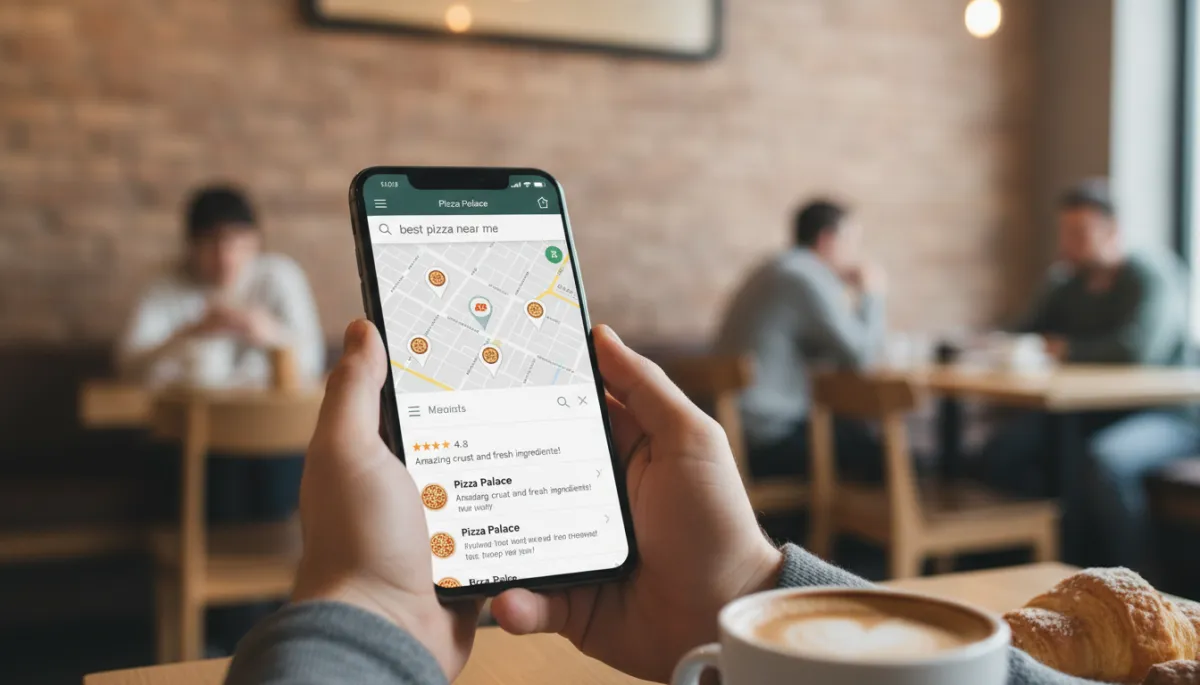
Local SEO positions you where buyers look at the exact moment of need.
Best-Fit Scenarios: When to Prioritize Local SEO, Paid Ads, or Both
Prioritize Local SEO If:
- You serve a defined geographic area (restaurant, salon, gym, clinic, contractor, local retailer).
- You plan to be in business in the same area for at least 2–3 years and want compounding returns from your marketing.
- You are willing to wait 3–6 months for meaningful traction in exchange for lower long-term lead costs.
- Your cash flow can tolerate slower initial results while the asset is built.
In this case, your non-negotiables for the next 90 days should be:
- Fully completing and verifying your Google Business Profile (including video verification where required).
- Posting to your profile at least twice per week with offers, updates, and photos—now a strong local ranking signal (Mediasearch Group).
- Cleaning up your citations and claiming key directories, including Foursquare, which now powers a large share of AI assistants’ local data (Pleiades Consultancy).
- Building unique, hyperlocal content on your site—no copy-paste location pages. Reference landmarks, neighborhoods, FAQs, and local testimonials.
Prioritize Paid Ads If:
- You are launching a new location or product and need leads this month, not six months from now.
- You have a clear, time-bound offer—grand opening, seasonal promotion, limited-time discount—that benefits from a surge of attention.
- Your margins can handle paying for each click or lead while you test and optimize campaigns.
- You are in a niche where organic rankings will be extremely slow or limited (for example, highly regulated industries or ultra-competitive keywords).

Paid ads can generate fast traffic, but only if you watch the numbers relentlessly.
Use a Hybrid Strategy If:
- You are past pure survival mode and want both immediate and long-term growth.
- You can commit a consistent monthly marketing budget for at least 6–12 months.
- You are willing to track results and shift budget based on data, not gut feel.
In a hybrid model, you might allocate 60–70% of your marketing budget to local SEO and content, and 30–40% to tightly targeted paid campaigns. Over time, as your organic presence strengthens and your cost per organic lead drops, you can reduce ad spend or use it more surgically—for launches, slow seasons, or high-value services.
Stage of Growth: How Your Business Maturity Should Guide the Choice
New or Pre-Revenue Businesses
If you are just opening your doors, your priority is proof of concept and cash flow. You do not yet have reviews, brand searches, or strong citations. In this stage, you should:
- Invest minimally but intelligently in local SEO: complete your Google Business Profile, fix core listings, and launch a review strategy from day one.
- Use tightly targeted paid ads (small radius, high-intent keywords, clear offers) to generate your first wave of customers and reviews.
Stable, Established Businesses
If you have steady revenue, repeat customers, and at least a year or two in the market, you should be ruthless about building durable visibility. That means:
- Doubling down on local SEO: unique location pages, structured data, ongoing reviews, and rich media that feed AI and map results (Listuro).
- Using paid ads strategically for upsells, new services, and filling capacity gaps during slow periods.

As your business matures, your marketing mix should shift from survival to scalability.
Multi-Location or Aggressively Growing Businesses
If you are opening new locations or expanding into neighboring cities, treat each location as its own local SEO project. Templated, copy-paste pages with only the city name swapped are now penalized and perform poorly, both in traditional search and AI overviews (Mediasearch Group). Pair that with aggressive, geo-targeted ad campaigns to seed awareness quickly in each new area.
A Simple Decision Framework You Can Use Today
Use the following questions to decide your next 90 days of focus:
- How urgent is your need for new revenue? If you must increase sales in the next 30–60 days, allocate at least part of your budget to paid ads while starting core local SEO tasks.
- How long do you plan to operate in this market? If the answer is “years,” you cannot afford to ignore local SEO. It will eventually reduce your dependence on paid traffic.
- What is your realistic monthly marketing budget? If your budget is small, focus on high-ROI local SEO basics and only run ultra-targeted, short-term ad campaigns tied to clear offers.
- Do you have internal capacity to execute? If you have staff who can manage reviews, content, and basic updates, lean harder into local SEO. If not, and you can only outsource one thing, consider outsourcing ads first for short-term wins, then reinvesting profits into SEO.
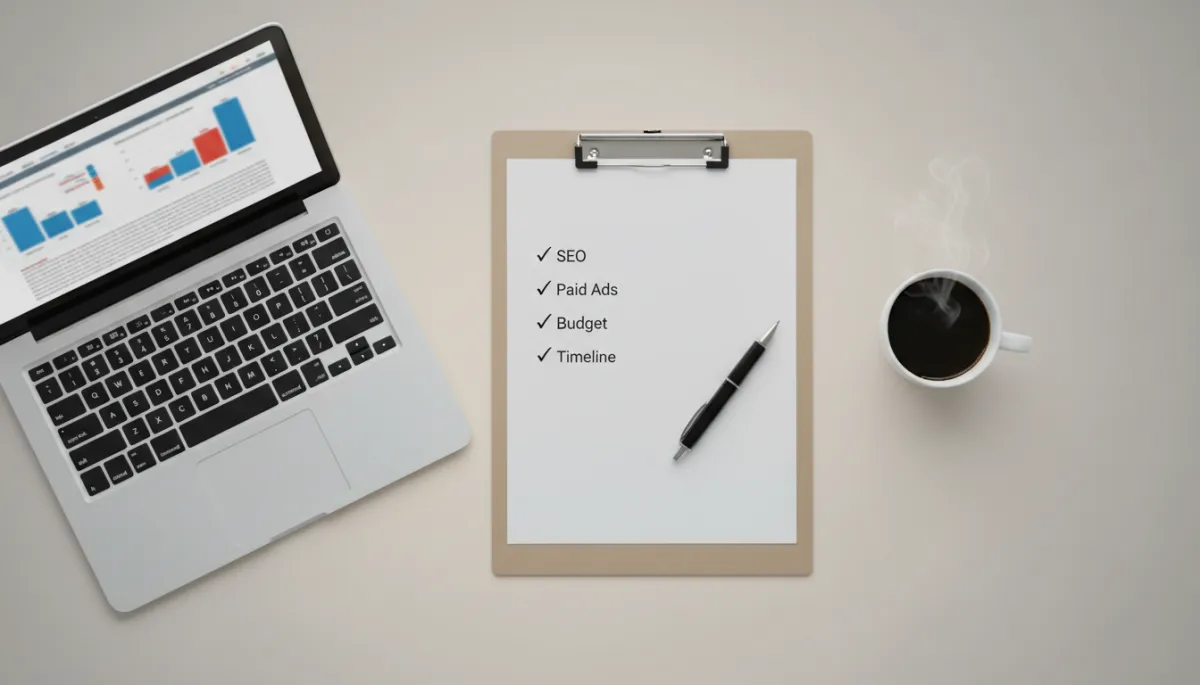
A clear, written plan beats reactive, month-to-month marketing decisions.
Final Verdict: What You Should Do Right Now
In 2026, treating local SEO and paid ads as an either–or choice is a mistake. However, you do need to decide which one leads and which one supports, based on timeline, cost, intent, and your current stage of growth. Here is the direct recommendation:
- If you are fighting for survival: Launch a focused paid campaign immediately to generate leads in the next 30–60 days, while simultaneously claiming your Google Business Profile, fixing your listings, and starting a review process. Do not postpone SEO; build it quietly in the background.
- If you are stable but stagnant: Shift more budget into local SEO—unique content, structured data, reviews, and AI-ready profiles—so that your cost per lead drops over the next 6–12 months. Use paid ads tactically for specific offers, not as your main lifeline.
- If you are growing aggressively: Run both. Use paid ads to fuel expansion and local SEO to secure each new market. Standardize your playbook and measure relentlessly.
