
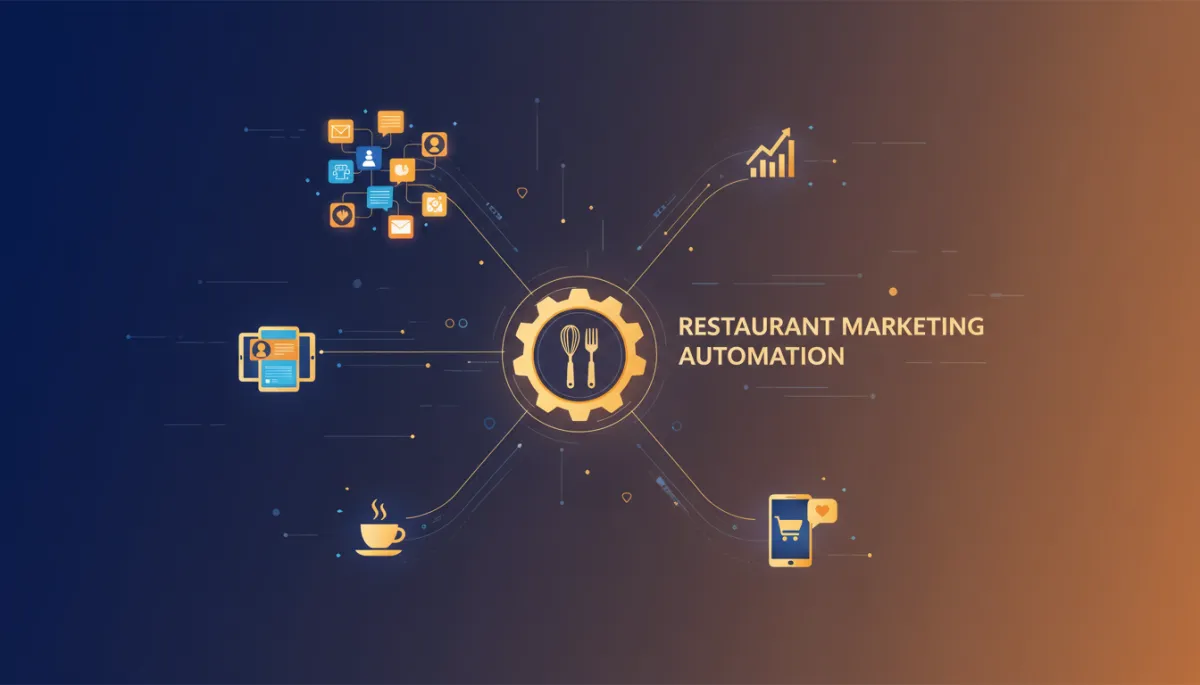
Top 5 Restaurant Marketing Automation Tips 2026
Restaurant Marketing, Automation, Customer Engagement
5 Restaurant Marketing Automation Strategies for 2026 (That Actually Drive Repeat Guests)
Marketing your restaurant in 2026 is no longer about posting a few food photos and hoping for the best—your guests expect timely, personalized communication, and your team needs tools that work quietly in the background. These five restaurant marketing automation strategies will help you attract new diners, personalize every interaction, and keep guests coming back, without overwhelming your staff.
1. Turn Guest Data into Personalized, Automated Campaigns
Your POS, online ordering platform, and reservation system are already collecting valuable guest data—order history, visit frequency, preferred channels. In 2026, leading restaurants are using AI to turn that data into automated, personalized marketing that runs 24/7. Industry research shows that nearly 70% of U.S. restaurants are adopting AI, while over 80% are increasing digital marketing investment, largely to support this kind of automation (restauranttechnologynews.com).
Start by segmenting your guests automatically—new visitors, regulars, high spenders, lapsed guests. Then, set up triggered campaigns:
A “welcome back” offer sent 24 hours after a first visit or first online order.
A personalized recommendation—based on past orders—before the weekend rush.
A “we miss you” message with a tailored incentive when a guest has not visited in 45–60 days.
Restaurants sending at least four automated campaigns per month are seeing significantly higher repeat visit rates—up to 23% higher, according to recent reports on email and SMS automation performance (ustechautomations.com). The key is consistency and relevance, not volume for its own sake.
2. Automate Email and SMS to Balance Demand—Not Just Fill Seats
Smart restaurant marketing automation is about more than blasting promotions. In 2026, operators are using email and SMS to govern demand—smoothing out slow periods, protecting peak times, and protecting margins. Automation platforms can read your reservations, online orders, and historical data, then schedule campaigns that match your true capacity.
Push last-minute lunch offers to nearby subscribers on rainy weekdays when walk-in traffic drops.
Promote takeout or delivery instead of dine-in when your floor is fully booked on Friday nights.
Highlight higher-margin add-ons—desserts, cocktails, family packs—in pre-arrival messages and order confirmations.
SMS continues to deliver outstanding engagement—with open rates around 98%—while email remains a workhorse for storytelling and menu updates. Restaurants using automation across both channels are capturing roughly 15% more covers per week than those relying on manual campaigns (ustechautomations.com). The beauty is that once your workflows are set, they run automatically, freeing your team to focus on hospitality.
3. Build a Smarter Loyalty Program with Predictive Personalization
Loyalty is no longer just “buy 10, get 1 free.” Modern programs use AI and automation to create deeply personalized experiences. Research shows that more than 80% of operators see personalization as a core driver of guest satisfaction and spend (qsrmagazine.com, restaurantmarketing.com). Your loyalty platform should automatically track visits, spend, and preferences—then tailor rewards without manual work from your staff.
Offer birthday and anniversary rewards that reflect a guest’s typical order—vegan, gluten-free, or cocktail-focused, for example.
Automatically unlock “VIP” status for high-frequency guests, with early access to new menu items or chef’s table experiences.
Send predictive offers—like a family bundle deal—around the days and times a guest usually orders for their household.
💡 Pro Tip: Make it effortless to join your loyalty program—QR codes on tables, a checkbox at checkout, and a simple sign-up flow on your website and Wi‑Fi portal.
4. Use Conversational AI, Voice, and Chatbots to Boost Engagement 24/7
Guests expect instant answers—“Are you open?”, “Do you have a table at 7?”, “Is the pad thai gluten-free?”—and they rarely care whether they get them from a person or a smart assistant, as long as the response is accurate and fast. That is where conversational AI and chatbots shine. Many restaurants are now using AI-powered phone agents and website chat to handle reservations, FAQs, and even orders, leading to more than 26% increases in phone-order revenue for some operators (qsrweb.com).
From a marketing perspective, every conversation is also a chance to build your database and personalize future outreach. A chatbot can:
Capture a guest’s email or mobile number while answering questions, then add them to the right segment automatically.
Recommend dishes based on dietary preferences, boosting check averages and guest satisfaction.
Trigger follow-up campaigns after a reservation or order—confirmations, upsell suggestions, or feedback requests.
Automated SMS and loyalty flows quietly nurture guests between visits and boost repeat business.
5. Connect Your Systems and Automate Feedback for Continuous Improvement
The most effective restaurant marketing automation strategies are built on connected data. Instead of juggling separate tools for POS, reservations, online ordering, loyalty, and email, more operators are moving to integrated platforms that share information in real time (certus-ai.com). This unified view allows you to automate smarter campaigns and measure what is truly working across channels—social, email, SMS, and search.
One of the highest-impact automations you can set up is a closed feedback loop:
Automatically send a brief survey or review request a few hours after dine‑in or delivery.
Use AI sentiment analysis to flag negative experiences so a manager can follow up personally and win the guest back.
Automatically invite happy guests to leave public reviews on Google or social platforms, strengthening your local SEO and online reputation.
Over time, these feedback insights can inform everything from your menu and pricing to your staffing and marketing calendar. Automation does the heavy lifting in the background—your team focuses on listening, responding, and improving the guest experience.
Bringing It All Together: Automation That Feels Personal, Not Robotic
Restaurant marketing in 2026 is defined by intentional, integrated automation. The most successful operators are not trying to replace hospitality—they are using technology to support it. By combining AI‑powered personalization, automated email and SMS, smarter loyalty, conversational tools, and connected feedback systems, you can deliver marketing that feels tailored to each guest while protecting your team’s time and your bottom line.
You do not need to implement everything at once. Choose one strategy—such as a simple automated re‑engagement campaign or a more personalized loyalty program—and build from there. As your data grows and your systems connect, your restaurant marketing will become more efficient, more profitable, and far more engaging for the guests you serve every day.
