
SEO Basics for Small Business Owners in 2026
SEO, Small Business Marketing
SEO Basics Every Small Business Owner Needs to Know in 2026
This guide explains SEO in plain language so you can make smart decisions about your website, attract more of the right visitors, and avoid wasting money on outdated tactics in 2026.
What SEO Really Means in 2026
SEO (search engine optimization) is the process of making your website easier for people and search engines to understand, trust, and recommend. In 2026, that no longer means “stuffing keywords” or trying to trick Google. It means proving that you are a helpful, real business that offers clear answers and a good experience.
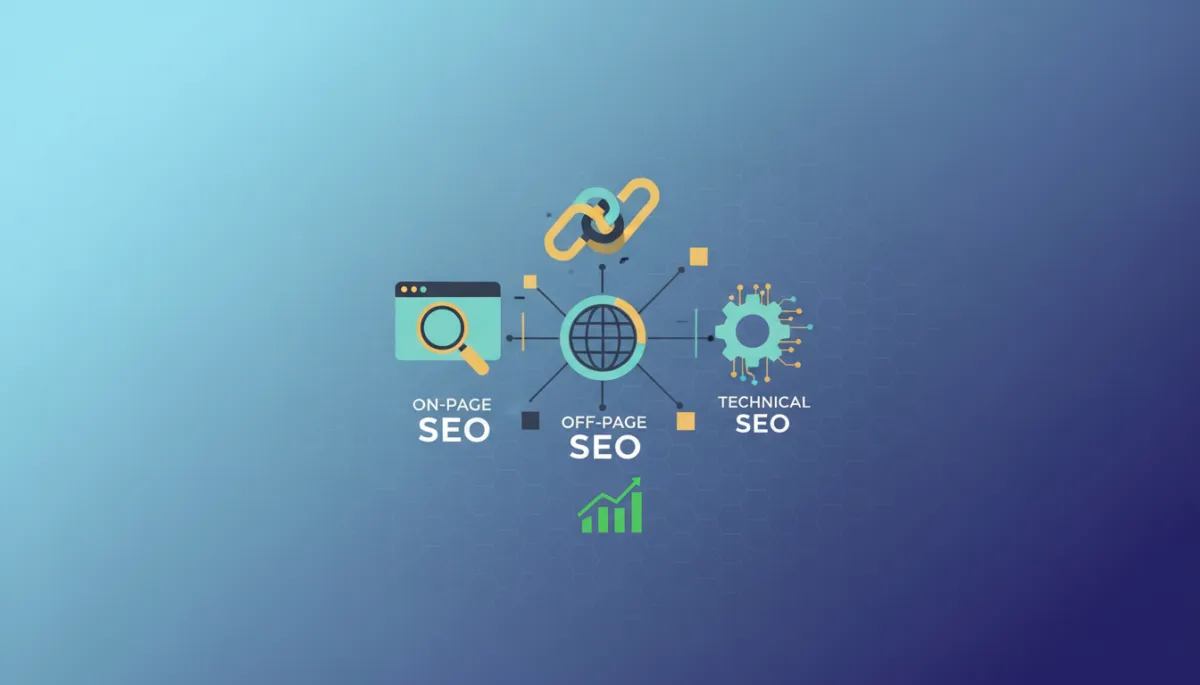
Search engines and AI tools now look at three main areas:
On-page SEO – what is on your pages: words, headings, images, and how everything is organized.
Off-page SEO – what other websites and people say about you across the web.
Technical SEO – how well your site works behind the scenes: speed, structure, and code quality.
Together, these areas tell Google, Bing, and AI systems whether your business is a reliable answer for people’s questions. Modern SEO is less about chasing a single “#1 ranking” and more about being visible wherever people look for help: traditional search results, maps, and AI-generated answers.
📌 Key idea: In 2026, SEO is about building trust and clarity, not clever tricks.
The Role of E‑E‑A‑T: Why Trust Signals Matter
Google and other platforms use a concept called E‑E‑A‑T: Experience, Expertise, Authoritativeness, and Trustworthiness. In simple terms, they want to see that:
You have real-world experience with what you offer (for example, years running a local bakery or plumbing business).
You show expertise by explaining things clearly and accurately on your site.
Other sites and customers treat you as an authority (reviews, mentions, press coverage).
Your site looks and feels trustworthy (secure connection, clear contact details, real people behind the brand).
Research on SEO trends shows that pages with strong E‑E‑A‑T signals are more likely to be cited in AI-driven results and to hold stable rankings over time. Including real stories, photos of your team, case studies, and honest explanations of your process all help here. Sources like SEO.com emphasize that clear, thorough, and regularly updated content is now a core ranking factor, not a “nice to have.”
On-Page SEO: Getting Your Website Pages in Order
Start with Search Intent, Not Just Keywords
In the past, many guides told you to pick a keyword and repeat it many times. In 2026, keywords are still useful, but mainly as clues to what the searcher wants. This is called search intent. For example:
“emergency plumber near me” – urgent, wants to call someone now (local and transactional intent).
“how to choose a wedding photographer” – wants guidance and tips (informational intent).
Studies of SEO performance in 2026 show that pages which fully answer the real question behind a search, including follow-up questions, perform much better than thin pages that only touch the surface. When planning a page, ask: “If I were the customer, what would I want to know before I feel confident to take action?”
Titles and Meta Descriptions: Your Organic Ad Copy
Your page title (the blue link in Google) is still one of the strongest on-page signals. Research suggests keeping it around 30–60 characters so it does not get cut off. Put the main phrase near the start and make the benefit clear. For example:
Weak: “Smith Plumbing – Home”
Stronger: “Emergency Plumber in Denver – 24/7 Same-Day Service”
The meta description is the short text under the title in search results. It does not directly change rankings, but it can raise your click-through rate. Think of it as a short ad: mention your main phrase naturally, add a clear benefit, and end with a gentle call to action such as “Get a free quote today.”
Headings and Page Structure: Make It Easy to Scan
Both people and AI tools prefer pages that are easy to scan. Use one clear H1 heading (the main title on the page), then H2 and H3 headings for sections and sub-sections. Under each heading, keep paragraphs short and focused on one idea. On-page SEO research shows that this simple structure helps search engines understand your content and makes it more likely to be quoted in AI answers or featured snippets.
💡 Practical tip: For important questions your customers ask, include a clear 40–60 word answer in one short paragraph. This format matches what AI systems like to pull into their responses.
Content Depth, Clusters, and Internal Links
Publishing more content can help, but only if it is genuinely useful. Studies show that sites publishing 16 or more solid posts per month often see higher traffic, yet thin or generic articles can actually hurt visibility. A better approach is to build content clusters.
A content cluster starts with a “pillar” page on a main topic, such as “Complete Guide to Bathroom Renovations,” then several supporting articles that cover subtopics in detail, like “How to Choose Tiles” or “Average Bathroom Renovation Costs in 2026.” You then link these pages to each other using natural anchor text. Research from SEO.com shows this structure helps you build topical authority, which is important for both search engines and AI systems.
URLs, Images, and Accessibility Basics
Keep your URLs short, clear, and readable: for example, /bathroom-renovation-costs-2026 instead of /page?id=123. This helps users and search engines understand the page at a glance. When you add images, use descriptive file names and helpful alt text, such as “kitchen-remodel-before-after” and “Before and after of a full kitchen remodel in Austin.”
Accessibility features like alt text, good color contrast, and readable font sizes make your site easier for everyone to use. On-page SEO studies note that these improvements also support better engagement and can indirectly help your rankings.

Clear page structure and headings help both visitors and search engines stay on track.
Off-Page SEO: Building Your Reputation Across the Web
Think Reputation, Not Just Links
Off-page SEO covers everything that happens away from your website but still affects how trustworthy you look. In 2026, experts describe it as “credibility building.” Links still matter, but search engines and AI tools now also look at brand mentions, reviews, and how often your business is cited as a useful source across the web.
Data from recent studies shows that the top-ranking page has almost four times more backlinks than pages in positions 2–10, and pages with over 100 backlinks get more than three times the traffic. At the same time, over 80% of SEO professionals believe unlinked brand mentions also help rankings and AI visibility. This means both links and mentions are worth your attention.
Earning Quality Backlinks the Right Way
A backlink is simply a link from another site to yours. In 2026, one relevant, editorial link from a trusted local news site or industry blog is worth far more than dozens of low-quality links from random directories. Tactics that still work include:
Sharing useful data or tips that journalists or bloggers want to quote.
Writing a thoughtful guest article for a relevant site (not mass guest posting).
Partnering with local organizations, charities, or events that list sponsors on their websites.
Building links is hard work. One industry report notes that only about 8.5% of cold outreach emails result in a link, and a single strong link can cost hundreds of dollars in time or fees. For a small business, it is often better to focus on a few realistic opportunities each quarter rather than chasing volume.
Brand Mentions, Reviews, and Social Proof
Search engines now understand when your business is mentioned even without a link. Being talked about positively in local Facebook groups, forums, or community blogs can strengthen your “entity” in the eyes of AI systems. This is especially important as AI tools pull answers from many sources at once and prefer brands they recognize and trust.
Online reviews are a major off-page signal. Encourage happy customers to leave honest reviews on Google Business Profile, Yelp, and relevant industry sites. Respond calmly and professionally to both praise and criticism. Research on off-page SEO shows that strong review profiles and positive sentiment are closely tied to higher visibility, especially for local searches and AI-powered map results.
💡 Practical tip: Add a short review request to your invoices or follow-up emails with a direct link to your Google review page. Make it easy, not pushy.
What to Avoid in Off-Page SEO in 2026
Many old link-building tricks now do more harm than good. Current expert guidance is very clear:
Do not buy links or join “private blog networks.” Google’s spam systems are good at spotting patterns and can penalize your site for months or years.
Avoid mass directory submissions and bookmarking sites. Most are ignored or seen as low value.
Do not force exact-match anchor text (for example, “cheap dentist bristol” repeatedly). Natural language and brand-focused anchors are safer and more realistic.
Instead of shortcuts, invest in becoming genuinely useful and visible in your community and industry. That is the kind of off-page SEO that holds up over time.
Technical SEO: Making Sure Your Site Can Perform
Site Speed and Core Web Vitals
Technical SEO is the foundation that allows your content and reputation to pay off. One of the most important parts is speed and stability, measured by Core Web Vitals. These include:
LCP (Largest Contentful Paint) – how fast the main content appears; aim for under 2.5 seconds.
INP (Interaction to Next Paint) – how quickly the page responds when someone clicks or taps; aim for under 200 ms.
CLS (Cumulative Layout Shift) – how much the layout jumps around as it loads; aim for under 0.1.
Recent reports show that more than half of sites still fail at least one of these metrics, and that poor scores can push a page down by many positions. Simple fixes include compressing images, removing heavy unused scripts, using modern formats like WebP, and choosing a reliable hosting provider. For many small businesses, working with a web developer for a one-time speed tune-up is a smart investment.
Mobile-First, Security, and Clean Structure
Google mainly looks at the mobile version of your site. Make sure your pages are easy to use on a phone: readable text, buttons big enough to tap, and no horizontal scrolling. Use the standard viewport meta tag so pages scale correctly on different screens. On-page SEO checklists for 2026 still treat mobile usability as a basic requirement, not an advanced feature.
Security is another basic signal. Your site should use HTTPS, not HTTP. Many sites now also add security headers like Content-Security-Policy and HSTS to prevent certain attacks. You do not need to understand the technical details, but you can ask your developer or host to confirm that your site is fully secure and does not show “not secure” warnings in browsers.
Finally, your site structure should be logical. Important pages should be no more than a few clicks from the homepage. Use a clear navigation menu, and avoid deep, confusing folder structures. This helps search engines crawl your site efficiently and ensures your “crawl budget” (the number of pages they are willing to scan) is not wasted on old or low-value URLs.
Structured Data and AI Readiness
Structured data, also called schema markup, is a way of adding extra information to your pages in a format that machines can easily understand. For example, you can mark up your business address, opening hours, product prices, or FAQs. Technical SEO resources note that schema helps not only with traditional search features (like rich snippets) but also with AI systems that pull in data for overviews and answer boxes.
For small businesses, the most useful schema types are often LocalBusiness, Article or BlogPosting, Product, and FAQ. Some website platforms and plugins can add these for you with simple forms. In 2026, there is also growing interest in “speakable” schema and other formats that help voice assistants and generative engines quote your content accurately.
📌 Key idea: Technical SEO is not about chasing every new trick. Focus on fast, secure, mobile-friendly pages with clean structure and basic schema, and you will already be ahead of many competitors.
SEO and AI in 2026: Showing Up in Generative Answers
AI-powered results, such as Google’s AI Overviews and other generative search tools, now appear for a growing share of queries. Studies suggest these appear for up to about 16% of searches, and only pages already in the top 20 organic results are usually eligible to be cited. In other words, strong basic SEO is still the entry ticket to AI visibility.
To increase your chances of being included in these AI answers, you can:
Write clear, direct answers to common questions, using simple language and short paragraphs.
Use headings that match natural questions, such as “How much does a bathroom renovation cost in 2026?”
Add structured data (schema) to help machines understand your content type and key details.
Some marketers call this Answer Engine Optimization (AEO) or Generative Engine Optimization (GEO). There is a lot of hype around these terms, but trusted sources warn against chasing unproven “hacks.” The safest path is to focus on the fundamentals already covered: strong on-page content, good technical foundations, and real off-page authority. These are the same signals AI systems rely on when choosing what to quote.
A Simple SEO Action Plan for Small Business Owners
Step 1: Fix the Basics on Your Website (On-Page + Technical)
Make sure each important page has a clear, helpful title and meta description written for humans, not robots.
Organize content with headings, short paragraphs, and clear answers to the main questions your customers ask.
Check that your site loads quickly, works well on mobile, and uses HTTPS. Ask your developer or host for help if needed.
Add internal links between related pages so visitors (and search engines) can easily move through your content.
Step 2: Build Trust Outside Your Website (Off-Page)
Claim and complete your Google Business Profile and any key industry directories with consistent name, address, and phone number.
Create a simple system to ask happy customers for reviews each month, and respond to all reviews politely.
Look for one or two opportunities per quarter to earn a quality mention or link—such as sponsoring an event, sharing a case study, or contributing an expert quote to local media.
Step 3: Keep Improving with Simple Metrics
Instead of obsessing over a single ranking, track a few simple numbers over time:
Total organic search traffic to your site each month.
How many calls, form submissions, or sales come from organic traffic.
Number and quality of reviews and mentions you receive.
Many experts now also look at visibility metrics such as impressions (how often your site is shown) and whether your content appears in rich results or AI overviews. As a small business owner, you do not need to track everything. Focus on whether the right people are finding you and taking action.
Final Thoughts: SEO in 2026 Is About Being the Best Answer
SEO in 2026 is not about gaming algorithms. It is about clearly showing that your business is a trustworthy, experienced, and helpful answer to real problems. On-page SEO helps you say the right things in the right way. Off-page SEO proves that others trust you. Technical SEO makes sure your site is fast, safe, and easy to use. Together, these three areas create a strong, long-term foundation for your online visibility.
If you focus on understanding your customers, answering their questions honestly, keeping your website in good technical shape, and building genuine relationships in your community and industry, you will already be following the best SEO practices for 2026—and you will be better prepared for whatever changes come next.
