

Why First-Party Data Is the Future of Accurate Digital Marketing
Digital Marketing, First-Party Data, Small Business Growth
Why First-Party Data Is the Future of Accurate Digital Marketing
Third-party cookies are disappearing, tracking is being rewritten, and the rules of digital marketing are changing fast. If you run a small business, you cannot afford to wait and see what happens. The brands that win over the next few years will be the ones that own their data, not rent it from ad platforms. That means putting first-party data at the center of your marketing strategy—starting now.
Cookie Deprecation: What’s Actually Changing
For years, third-party cookies quietly followed your customers across the web, feeding platforms like Google and Meta with data to target ads. That era is ending. Chrome, the most widely used browser, is phasing out third-party cookies as part of Google’s Privacy Sandbox initiative, following earlier restrictions from Safari and Firefox. Industry analysts expect the full impact to be felt by 2026 as privacy-first technologies replace legacy tracking.
Cookie deprecation means:
Less precise ad targeting based on a person’s behavior across multiple websites.
Harder attribution—linking a sale back to a specific ad, channel, or campaign.
More pressure to comply with privacy laws like GDPR and CCPA, and to prove you are respecting user consent.
The big platforms will survive. They already sit on massive volumes of logged-in, first-party data. The real risk is to small businesses that rely on “set it and forget it” paid campaigns and assume the platforms will keep doing the heavy lifting. That assumption is no longer safe.
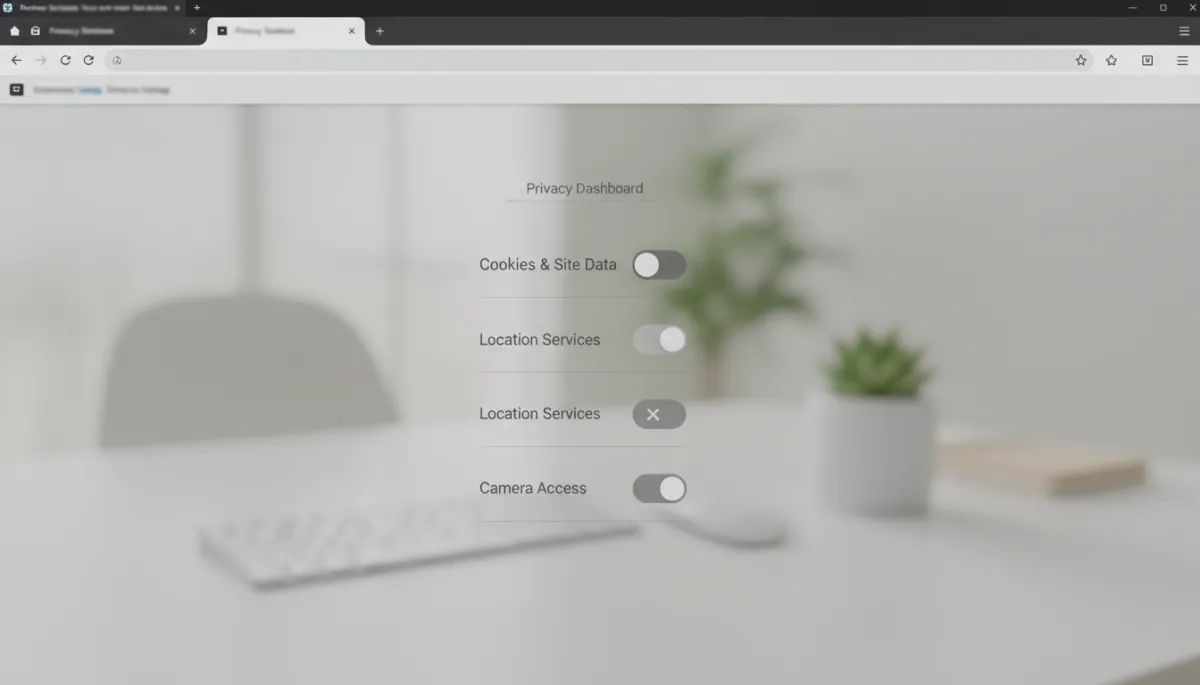
As browsers restrict cookies, relying on legacy tracking will steadily erode your marketing accuracy.
The Death of Third-Party Tracking (and What Replaces It)
Third-party tracking is not just shrinking—it is being redesigned from the ground up. Traditional methods that stitched together a user’s journey from site to site are being replaced with privacy-first alternatives. According to Forbes and other industry sources, the main successors are:
Contextual advertising – Ads targeted based on the content of the page (for example, running a running-shoe ad on a marathon training article), not on an individual’s browsing history.
Privacy Sandbox and similar APIs – Browser-level tools that allow some audience targeting and measurement without exposing raw user-level data.
Unified IDs and clean rooms – Encrypted, consent-based IDs and secure environments where data can be matched without sharing everything directly.
These technologies matter, but you do not control them. They sit between you and your customers, just like third-party cookies did. Relying only on them keeps you in the same vulnerable position: dependent on someone else’s rules, data, and algorithms.
The only durable response is to flip the script: collect rich, permission-based data directly from your audience and use that to drive your marketing. That is first-party data—and it is where your advantage lies as a small, nimble business.
📌 Key Takeaway: Third-party tracking is being replaced, not repaired. If you do not own data about your audience, your targeting, personalization, and measurement will become weaker and more expensive.
What First-Party Data Really Is (and Why It’s More Accurate)
First-party data is information you collect directly from your customers and prospects through your own channels—your website, your email list, your CRM, your point-of-sale system, your app, and your surveys. It includes:
Email addresses and contact details gathered with clear consent.
Purchase history, average order value, and repeat purchase behavior.
Website behavior such as pages viewed, forms submitted, and products browsed (tracked with compliant analytics tools).
Feedback, reviews, support tickets, and survey responses.
This data is more accurate for one simple reason: it is based on real interactions with your brand, not guesses from someone else’s tracking pixel. It tells you what your actual customers do, want, and respond to. In a privacy-first world, that makes it both more powerful and more sustainable than any third-party profile.

First-party data connects what customers say, do, and buy into one usable view.
Why Small Businesses Cannot Ignore First-Party Data
Large brands can throw money at the problem—buying advanced tech stacks, hiring analysts, and negotiating data partnerships. You do not have that luxury. Your advantage is focus and proximity to your customers. A disciplined first-party data strategy lets you compete on precision, even with a modest budget.
When you invest in first-party data, you:
Depend less on volatile ad algorithms and rising click costs.
Build a direct, owned relationship with your audience via email, SMS, and loyalty programs.
Improve marketing accuracy because you are targeting real customers and high-intent prospects, not anonymous “lookalikes.”
💡 Pro Tip: Treat your email list and CRM as core business assets. They are as important as your inventory, your equipment, or your lease.
Step 1: Audit How You Currently Collect Data
Before you build a first-party data strategy, you need a clear picture of where you stand. Set aside time to answer these questions honestly:
How do people currently join your email list or loyalty program? Is it obvious, or buried at the bottom of your site?
What data do you collect at checkout—just email and name, or also preferences, birthday, or product interests (with consent)?
Where is your customer data stored: in a proper CRM, in your ecommerce platform, or scattered across spreadsheets and inboxes?
Document every touchpoint where a visitor or customer gives you information. This becomes your map for improving and expanding first-party data collection in a structured way, instead of grabbing data randomly and hoping it is useful later.
Step 2: Design a Clear Value Exchange
Customers will not share data just because you ask. They share it when the value is obvious. Your job is to make that trade crystal clear and immediate. Examples that work for small businesses include:
A first-order discount or free shipping in exchange for an email address.
A simple quiz that recommends the right product and collects preferences along the way.
Early access to new products, events, or limited-time offers for subscribers or loyalty members.
According to multiple industry reports, content and value exchange—such as ebooks, webinars, and exclusive content—are proven ways to grow high-quality first-party data. You do not need a 40-page whitepaper; a short, practical guide tailored to your audience is often enough.

Customers share data willingly when the benefit—discounts, access, or convenience—is immediate and clear.
Step 3: Implement Basic, Compliant Data Infrastructure
You do not need enterprise software, but you do need structure. At minimum, put these building blocks in place:
A CRM or unified customer list. Use a simple CRM or your ecommerce platform’s customer database to store contact information, purchase history, and engagement data in one place.
Consent management. Make your privacy policy clear, use checkboxes for marketing consent, and honor opt-outs. This is non-negotiable under GDPR, CCPA, and similar laws.
Modern analytics. Move away from pure cookie-based tracking and use privacy-conscious analytics tools that support first-party data and server-side tracking where appropriate.
⚠️ Warning: Collecting data without proper consent is a liability, not an asset. If you cannot prove permission, do not use the data for marketing.
Step 4: Turn First-Party Data into Better Marketing
Data sitting in a database does nothing for your business. You need to use it to sharpen your campaigns. Focus on three practical applications that any small business can execute:
1. Segmentation That Reflects Real Behavior
Split your audience into meaningful groups based on what they do, not just who they are. Examples:
New subscribers who have never purchased.
High-value customers who buy multiple times per year.
Lapsed customers who have not purchased in six months.
Then tailor your messaging. New subscribers get education and social proof. High-value customers get early access and VIP offers. Lapsed customers get win-back campaigns. This is where first-party data directly increases revenue.
2. Smarter Paid Media Targeting
Instead of letting ad platforms guess who to target, feed them what you know. Upload customer lists (with consent) to build custom and lookalike audiences. Use your first-party data to:
Exclude existing customers from prospecting campaigns so you do not pay to reach people you already own.
Create high-quality lookalike audiences based on your best buyers, not all website visitors.
As third-party tracking weakens, these first-party powered audiences become one of the few reliable ways to keep paid campaigns efficient.
3. Better Measurement and Attribution
Perfect attribution is gone. Browser restrictions and privacy rules make it impossible to track every click. But you can still get a clear directional view by combining:
First-party analytics (traffic, conversions, signups) from your site and store.
Channel-level data from email, paid ads, and social platforms.
Track trends over time: when you increase email volume, do repeat purchases rise? When you launch a new lead magnet, does your cost per acquisition fall? Use your own data as the source of truth, not just the numbers in ad managers that are increasingly incomplete.

When teams act on segmented first-party data, marketing spend shifts from guesswork to deliberate investment.
Step 5: Keep It Ethical, Transparent, and Simple
Privacy is not just a legal requirement; it is a trust requirement. Small businesses win when customers feel known, not watched. Build your first-party data strategy on three principles:
Transparency: Tell people what you collect and why, in plain language. Avoid legal jargon where possible.
Control: Make it easy to unsubscribe, update preferences, or opt out of tracking. Do not hide these options.
Relevance: Use data to make your marketing more useful—better recommendations, timely reminders, and meaningful offers—not just more frequent.
📌 Key Takeaway: A privacy-first approach does not weaken marketing—it strengthens it. When customers trust you, they share more, buy more, and stay longer.
A Simple First-Party Data Roadmap for the Next 12 Months
To stay ahead of cookie deprecation and the death of third-party tracking, you do not need a five-year transformation plan. You need a focused 12-month roadmap that you can execute with your existing team. Use this as a starting point:
Quarter 1: Audit your current data collection, clean up your lists, and implement clear consent mechanisms on your website and checkout.
Quarter 2: Launch or improve your lead capture (pop-ups, forms, loyalty signups) with strong value exchanges and an onboarding email sequence.
Quarter 3: Build basic segmentation in your CRM and tailor campaigns for new, loyal, and lapsed customers. Start using customer lists in your paid media.
Quarter 4: Review performance, refine segments, and expand into more advanced tactics like surveys, quizzes, or partnerships with complementary businesses to enrich insights.

A simple quarterly roadmap keeps your first-party data strategy moving without overwhelming your team.
The Bottom Line: Own Your Data, Own Your Future
Cookie deprecation and the death of third-party tracking are not temporary inconveniences; they are structural shifts in how digital marketing works. Waiting for a “fix” from ad platforms is not a strategy. It is a risk you do not need to take.
As a small business owner, your path is clear:
Build direct relationships and collect data with consent at every meaningful touchpoint.
Centralize that data, keep it clean, and use it to segment, personalize, and measure your marketing.
Treat first-party data as a long-term asset that compounds in value the more you invest in it.
The businesses that act now will not just survive the cookie-less future—they will outperform competitors who are still chasing disappearing third-party signals. Own your data, and you own your marketing accuracy, your customer relationships, and ultimately, your growth.
